Welcome to the Mountjoy Ministries Blog

This blog was authored by Bryan W. Sheldon, author and Bible teacher. His books are listed below. The studies in the blog are offered in the desire that they may be helpful in directing readers to the truths contained in the Bible.

Friday, March 27, 2009

Christianity Considered Course Part 1


What about the Bible (Part 5)


Let's take our enquiry a little further in this blog. We need to ask, after 2000 years of transmission, is the New Testament record a true reflection of what the gospel writers penned? This question concerns what has happened to the records since they were written down. Suppose the original writers of the New Testament did give us a reasonably accurate account of the character and ministry of Jesus. That was two thousand years ago. The writings have been copied and translated many times since then, so how do we know that they weren’t changed in the process, either accidentally or deliberately?


This question can be answered by considering the testimony of the many manuscripts that have survived from antiquity. For example, in respect of the New Testament, we possess about 5,300 partial or complete Greek manuscripts, as well as an additional 8,000 or so manuscripts of New Testament translations in such languages as Syriac, Armenian, Ethiopic, Coptic, Gothic, Slavic, Sahidic and Georgian. Then we have numerous quotes from early Christian writers from the end of the first century onwards. More than 89,000 allusions to passages in the New Testament have been listed. These quotes help to establish the accuracy of the original text.


This weight of evidence is normally sufficient to assert that the text of the New Testament as we have it, is authentic. Sir Frederick Kenyon, a former Director of the British Museum and one of the greatest authorities on the subject, said in his book ‘Our Bible and the Ancient Manuscripts’: “The number of manuscripts of the New Testament, or early translations from it in the oldest writers of the Church, is so large that it is practically certain that the true reading of every doubtful passage is preserved in some one or other of these ancient authorities. This can be said of no other ancient book in the world.”


Other experts in the field of ancient literature have this to say about the authenticity of the New Testament. Clark Pinnock, Professor of Systematic Theology at McMaster Divinity School in Ontario: “There exists no document from the ancient world, witnessed by so excellent a set of textual and historical testimonies and offering so superb an array of historical data, on which an intelligent decision may be made. An honest person cannot dismiss a source of this kind. Scepticism regarding the historical credentials of Christianity is based on an irrational basis.”


The cumulative effect of this weight of evidence was summed up by F. J. A. Hort of Cambridge University, one of the greatest textual critics of the New Testament, in his book ‘Introduction to the New Testament in the Original Greek’. He said that, leaving aside the comparatively trivial variations between the manuscripts: “the amount of what can in any sense be called substantial variation is but a small fraction of the whole...and can hardly form more than a thousandth part of the entire text.” To quote Sir Frederick Kenyon again, from ‘The Bible and Theology’: “The interval between the dates of the original composition and the earliest extant evidence becomes so small as to be in fact negligible, and the last foundation for any doubt that the Scriptures have come down to us substantially as they were written has now been removed. Both the authenticity and the general integrity of the books of the New Testament may be regarded as finally established.” He also said, “It is reassuring at the end to find that the general result of all these discoveries and all this study is to strengthen the proof of the authenticity of the Scripture, and our conviction that we have in our hands, in substantial integrity, the veritable Word of God.”


Is the Bible really the Word of God?


After all, if Jesus is the most complete revelation of the person and character of God that we have been given, and if He did die on the cross to pay the penalty for our rebellion against Him, and if He is offering to us the incredible gift of his forgiveness and love for all eternity, then it would have been foolish of Him not to have taken steps to see that we had a reasonably accurate account of these things. And if this is so, would it not be foolish of us to reject his love because we imagined wrongly that the record was distorted?


In his book, the Ring of Truth, J.B. Philips reports a radio interview he had with the distinguished classical scholar, Dr. E.V. Rieu, who translated Homer into very modern English for the “Penguin Classics”. Rieu was sixty years of age and a lifelong agnostic when Penguin invited him to translate the Gospels. A year later, Dr. Rieu was a believer, having been convinced by the text. When Philips asked him, “Did you not get the feeling that the whole material was extraordinarily alive?” Rieu replied, “I got the deepest feeling. My work changed me. I came to the conclusion that these words bear the seal of the Son of Man and God. And they’re the Magna Carta of the human spirit.” Reflecting on the experience Philips said, “I found it particularly thrilling to hear a man who is a scholar of the first rank, as well as a man of wisdom and experience, openly admitting that these words written long ago, were alive with power. They bore to him as to me, the ring of truth.”

Saturday, March 14, 2009

Christianity Considered 1


Christianity Considered 1 (Part 4)


What about the Bible?


In the last blog we suggested the biographies of the life of Jesus of Nazareth were reliable because they were written either by eye-witnesses or by those who received their information first hand from eye-witnesses. But that still leaves us with another question. Were the followers of Jesus themselves deceived ?

Were the disciples of Jesus subject to a deception?

This question has to be faced. If the biographies were, in fact, eye-witness accounts, were the writers themselves, subject to a deception? Were they gullible? Had they been deluded into believing Jesus was someone special? After all, it was 2,000 years ago, and isn’t commonly believed that people of that era were illiterate and uneducated? History presents a somewhat different picture.


Some 300 years before the birth of Christ, an order was given for the building of a great library in Alexandria. This world renowned library became a driving force for learning. Other libraries followed and education was highly valued. In the wake of this fresh impetus for learning, philosophical schools were set up by Plato and Aristotle, and their philosophies spread throughout the empire. It is no surprise that education was highly prized in Jesus’ day, especially among the Jews. Paul who wrote a substantial part of the New Testament was highly educated in three cultures, Roman, Greek and Jewish. The scholar F. F. Bruce, wrote of Paul: “I have learnt to regard Paul as the greatest man who ever wrote in Greek. If anyone should call him the greatest writer of all time, I would not dispute that claim.”


Luke, whom we have already met, was an educated Greek. Professor E. M. Blaiklock, who was a lecturer in the classics of Greece and Rome, and who had studied in that field for forty years, said: “Luke is a consummate historian, to be ranked in his own right with the great writers of the Greeks.” Matthew, writer of the first gospel, was a civil servant, an employee in the custom and excise department of the government of Rome. He kept records, calculated taxes and collected money. Even a cursory reading of the New Testament will demonstrate that the people who testified to the facts of the life of Jesus were neither fools nor gullible. This leads us to ask a further question.
Were the followers of Jesus deceivers ?

If the followers of Jesus were not deceived, could it be that they themselves were deceivers? Did they engage in a conspiracy to raise Jesus to a figure of legend? The answer must be an emphatic ‘No!’ Everything we know about them marks them out as honest men. And besides, all were persecuted for their faith, and most were martyred. It is highly unlikely that they would die for a lie. And considering the numbers involved, at least one would have broken ranks and recanted. But none did!

The absence of fictitious material

In support of the belief that the writers of the life of Christ were neither deceivers nor deceived, it could be asserted that there is a distinct lack of fanciful material in the New Testament record. What is commonly called "myth", i.e. fable or legend, is conspicuous by its absence. Many who work in the field of ancient literature have commented on this. Archibald Rutledge wrote: “For more than 30 years it was my chief business in life to study and try to teach literature. To anyone earnestly so engaged there naturally comes a certain ability to distinguish the genuine from the spurious, the authentic from the invented. Every time I read the Gospels I am pressed more deeply with the conviction that the narratives concerning Christ do not belong to the realms of fancy, tradition or folklore…The incidents are such that they could never have been invented; and their effect on the world for 2,000 years has been such as no inventions could have produced. These stories possess that patent transparent validity that belongs only to truth.”

C. S. Lewis, who was professor of Medieval and Renaissance Literature at the University of Cambridge, wrote of his conversion to Christianity in his autobiography, ‘Surprised by Joy’: “I was by now too experienced in literary criticism to regard the Gospels as myths. They had not the mythical taste...nothing else in all literature was just like this … And no person was like the Person it depicted; as real, as recognisable, through all the depths of time, as Plato's Socrates or Boswell's Johnson, yet also numinous, lit by a light from beyond the world, a god. But if a god—we are no longer polytheists—then not a god, but God. Here and here only in all time the myth must have become fact; the Word, flesh; God, Man.”

Thursday, February 26, 2009


Christianity Considered 1. (Part 3)

What about the Bible?

In the last blog we raised the question, 'are the biographies of Jesus reliable' and considered John's gospel, which contained the record of an eye-witness. This time we will examine Luke's biography, who obtained his material from those personally involved with Jesus.

The biography written by Luke

It is widely accepted that Luke was an educated Greek, and a doctor by profession. He wrote two books; the first giving a history of the life of Jesus of Nazareth from His birth to His death and resurrection; the second describes many of the events experienced by the early church during the first thirty years of its existence. The two books together, his gospel and the Acts of the Apostles, account for some forty percent of the New Testament. The value of his contribution to the canon of Scripture cannot be over-estimated.

Luke, begins his gospel, by claiming that because of the information and knowledge that he had at his fingertips, (as a result of contacts and relationships), he was well suited to write a biography of the Messiah. He said, “Inasmuch as many have taken in hand to set in order a narrative of those things which have been fulfilled among us, just as those who from the beginning were eyewitnesses and ministers of the word delivered them to us, it seemed good to me also, having had perfect understanding of all things from the very first, to write to you an orderly account, most excellent Theophilus, that you may know the certainty of those things in which you were instructed.” (Luke 1:1-4)

Luke's record as an historian

Since Luke’s contribution to the New Testament is substantially that of an historian, we can narrow our question a little further. In this specialist field what is his reputation? The answer is, that his ability as an historian has been amply documented. There are numerous instances where he refers to rulers and historical events in his two books. These can be, and have been, tested from other sources. Invariably they have been found to be accurate. Examples include:

(i) a reference to Philippian rulers as ‘praetors’,
(ii) his choice of the word ‘proconsul’ as the title for Gallio in Corinth (Acts 18.12),
(iii) his describing of Publius as ‘the leading man of the island’ in Malta (Acts 28.7), and
(iv) his use of ‘politarchs’ to denote the civil authorities of Thessalonica. (Acts 17.8)

He gets no less than fifteen Roman governor titles right. His accuracy extends in other directions also. For example, the description of his sea voyage with Paul to Rome, and their shipwreck on Malta, in Acts 27, has been called "one of the most instructive documents for the knowledge of ancient seamanship" that we possess (Holtzmann).

Sir William Ramsay, Professor of Classical Art and Architecture at Oxford University, an eminent archaeologist and holder of numerous doctorates said, the account of the voyage as a whole is commonly accepted by critics as the most trustworthy part of Acts”.

The distinguished Roman historian A. N. Sherwin-White said of Acts: “Any attempt to reject its basic historicity, even in matters of detail, must now appear absurd.” The historical accuracy demonstrated in the Acts of the Apostles has been widely accepted, but the question remains, can we be as confident about his record of the life of Jesus? F. F. Bruce, a highly respected Classical and New Testament scholar, can answer this query for us. “A man whose accuracy can be demonstrated in matters where we are able to test it is likely to be accurate even where the means for testing him are not available. Accuracy is a habit of mind...Luke's record entitles him to be regarded as a writer of habitual accuracy.” In other words, Luke’s biography of Jesus can be trusted.

Saturday, February 7, 2009

Chirstianity Considered 1 (Part 2)

What about the Bible (Continued)


In the last blog we asked if the Biblical record of the life of Jesus was reliable. This is the question we should now consider.
The biographical material of His life is contained in the first four books of the New Testament. It is right to ask, what kind of evidence is it? Is it written by eye-witnesses, or at least, does it contain eye-witness testimony? Furthermore, if it is eye-witness testimony, are the witnesses themselves honest and reliable, and neither deceived nor deceivers. And we need to be sure that the original records have not been tampered with between when they were written and now.

Q.1. Are the biographies of Jesus eye-witness accounts?

What we are asking here is, do we have in the New Testament, material that is written by people directly involved in the events they record? Where this is not the case, did they get it from those immediately involved? The answer is ‘yes’ and ‘yes’, that is, we have a substantial amount of eye-witness testimony, as well as reported records of eye-witnesses.


Of the four books of the New Testament that record the life of Jesus, the first and fourth are by eye-witnesses. The authors of these books are Matthew and John respectively. They were two of the group of twelve that accompanied Jesus during His three years of public ministry. The two other biographies were written by Mark and Luke. Mark, was well placed to write a biography because he was closely connected with the life of Jesus. From the very beginning he was involved because his mother was one of the wealthy women that supported the Messiah. Their home was often used by Jesus and was the venue that Jesus used to celebrate the last supper. This home of the family of Mark became a centre for the new Jesus movement. The apostle Barnabas was his uncle. Luke was also well supplied with eye-witness material, having been associated with the apostles for decades. Much of his material was supplied by Peter, the apostle to the Jews. Mary, the mother of Jesus, also acted as a source for Luke. This accounts for the personal details about the birth of Jesus that he was able to include. Let us look a little closer at two of the gospel writers.

The biography written by John

John's gospel specifically claims to be a direct eye-witness account. We have his plain statement at the end of his gospel declaring: “This is the disciple who testifies of these things, and wrote these things; and we know that his testimony is true”. (John 21:24). And when there are instances where the facts might be questioned, he gives additional assurances. For example, when the side of Jesus was ruptured with a spear, and blood and water flowed from the wound (John 15.34), John added a triple affirmation. First, that he saw it; secondly, that he wrote it accurately; and thirdly, that his own conscience confirmed the accuracy of his narrative. He wrote, (i)“he who has seen has testified”, and (ii) “his testimony is true”; and (iii) “he knows that he is telling the truth, so that you may believe”. (John 19:35)

This eye-witness flavour to John’s gospel has been accepted by some experts who are experienced in assessing ancient literature and sorting the genuine from the imitation. A.T. Olmstead, who was Professor of Ancient and Oriental History at the University of Chicago, said, the story of the raising of Lazarus in chapter 11 had "all the circumstantial detail of the convinced eyewitness", and the record of the race to the empty tomb in chapter 20 is "told by an undoubted witness - full of life, and lacking any detail to which the sceptic might take justifiable objection." Archbishop William Temple is another who came to a similar conclusion and commented: “It is most manifestly the record of a personal memory. Nothing else can account for the little details, so vivid, so little like the kind of thing that comes from invention or imagination.”

Writer Frank Morison was drawn to the biographies of Jesus, and planned to write an essay on the trials of Jesus before Annas, Caiaphas, the Sanhedrin and Pilate. He intended to call it, ‘Jesus the Last Phase’. He considered Jesus an individual of integrity with high moral standards, but who had been elevated by His followers to a figure of legend. However, studying the gospel records changed his mind. Confronted by undoubted eye-witness accounts he acknowledged that the records were historically correct and that Jesus really did rise from the dead. Convinced by the evidence, he wrote ‘Who Moved the Stone?

John, the eye-witness

To support his claim that he was an eye-witness of the ministry of Jesus of Nazareth, John includes in his biography those passages where he speaks of his presence in the company of Jesus. Using a third person description of himself, (‘the disciple whom Jesus loved’), he tells us:

(i) He was at the table on Passover night when Jesus celebrated a last Passover meal with the disciples, (chapter 13). During that meal, after Jesus had said He would be betrayed, he and Peter exchanged looks and words. Moreover, he witnessed the identification of Judas as the traitor, and heard Jesus despatch him with the words, “What you do, do quickly.” (13:27)
(ii) The following morning he accompanied Mary, the mother of Jesus, to the crucifixion site and received a word from Jesus to care for her. (19:26,27)
(iii) As previously intimated, he was early to the empty tomb on resurrection morning, (20:1-9) and
(iv) also present when the risen Messiah appeared to the disciples by the Sea of Galilee (chapter 21).
So let us frame the question plainly; do the records read as if they are true? In the opinion of this writer, they do. There are no internal contradictions, nor is there any variance with the other biographers of the life of Jesus. Each of the authors give the same facts from a different perspective, yet remain in perfect agreement. Furthermore, these biographies were in circulation during a period when many of the contemporaries of Jesus were still alive. Even His enemies, the Sanhedrists, never disputed that Jesus performed miracles, and did the things reported. They put a different spin on His life, of course, calling Him a sorcerer, but the facts recorded by the gospel writers were never disputed.
In the next blog we will consider the biography written by Luke.

Saturday, January 31, 2009

Christianity Considered 1

Lets Consider the Bible

Christians are a people of one book, and that book is the Bible. They consider it unique - different. It is a book alone, a book apart, a book above all other books. There is none like it and none with it. For the Christian, the Bible (like its author) is all-sufficient. It is an original book.

It is the one book, the only book, that begins in the beginning, and therefore is self-introductory. “In the beginning God created the heavens and the earth”. (Gen. 1:1)

It is designed to be self-explanatory. “In the beginning was the Word, and the Word was with God, and the Word was God. He was in the beginning with God. All things were made through Him, and without Him nothing was made that was made.” (John 1:1-3) If you come to any part or passage in the Bible you do not understand, the explanation is somewhere else in the Bible, not somewhere else outside it. The book explains itself. And the book must conclude itself. You cannot write a follow up – you cannot add another chapter – it is complete! It begins, it ends!

The Bible as the Word of God

While they often use the term ‘Bible’, Christians usually use the term, ‘the Word of God’. The book derives its authority from its author. This is not a book about God – this is a book from God. God is not the subject of Scripture – He is its author – this is His Word. It is because He is the author that the book has authority. “Wonderful, wonderful, Word of the Lord”. Christians speak like that, and they speak well – it is God’s Word.
A person’s words should reflect his character. A man who is true should speak the truth. God is the God of truth and the God of truth cannot lie. The Bible is true because it is His Word. It is the Word of Truth. Moreover, it is the Word of Power, and the Word of Holiness (Holy Bible), because it reflects the character of the author.


And you learn theology by studying the Bible. Reading its pages will bring to your heart and mind concepts and thoughts of God that are true to Him. God is love, God is light, God is life. Reading the Bible will give you an accurate and true understanding of the one and only true God. And you will think of Him as He is – in His greatness, in His goodness, in His glory.

The Oracles of God

Another title of the Bible is ‘the oracles of God’ (Rom.3.2). This means that the Bible was first brought to the minds and hearts of people from the mouth of God. There are 416 instances of the phrase, “Thus says the Lord”, which is another way of saying, ‘the Word of the Lord’. Oracle means the spoken word. Such was the honour given to the Old Testament prophets.

The Scriptures

A much more familiar term is ‘Scripture’. Scripture is the written word of God. It is the Word of God in a more permanent and convenient form. The written word can be studied, examined, quoted. God’s Word has been written down – it is firm, it is sure. It has been written on many materials—papyri, clay, cloth, stone, paper. The Old Testament tells of a time when it was written on a rock. The New Testament tells us it can be written on the heart.
What is the Bible about?

Jesus of Nazareth is the main subject of Scripture. ‘In the volume of the book it is written of me’. (Heb.10.7 KJV) Indirectly it is about us, but primarily about Him. There is no part of the Bible that is not concerned with Christ. He is there on the first page, in the beginning, and He is there at the end, on the last page. As all the roads link up, the motorways, the A roads, the B roads, and so on, so does every part of Scripture. He is the beating heart of the Bible, supplying energy and life to every individual page.
Are the Biographies of Jesus accurate?

If the person of Jesus of Nazareth, the Christ of God, is the primary subject of Scripture, the key question must be—do we have an authentic, accurate record of His life and work in the pages of the Bible? If the claim is, that God entered human history in the person of Jesus, to offer himself as a Messiah and Deliverer, and die a sacrificial death to pay for our sins, then we must be sure that we have the facts straight. If His contemporaries say He conquered death and rose from the grave, can we be sure that their testimony has been accurately preserved?
We will consider these questions in the next blog.
Happy Bible Study everyone.

Monday, December 29, 2008

Teaching Newsletter


We send out to those who have an interest in Bible Study, and have registered as a 'friend' of Mountjoy Bible School, a bi-monthly teaching newsletter. Should any readers of this blog wish to receive the newsletter, please email me your name and postal address and I will add you to our database and you will receive one each time they are published. Your details should be sent to bryan@bryansbiblestudy.co.uk.
Please be advised that currently they are only available to friends in the U.K. to whom they are sent free of charge.

May I take this opportunity to wish you all abundant blessings in the New Year.

Saturday, December 13, 2008

'Christianity Considered' now on YouTube

CHristianity Considered Part 1 is now on YouTube: it is split into two parts. The links are as follows:

CC1 1/2 http://uk.youtube.com/watch?v=Jus8Xi4HbNk
CC1 2/2 http://uk.youtube.com/watch?v=XTspFOJIZnA


Christianity Considered Part 2 is also on YouTube in two parts. The links are as follows:

http://uk.youtube.com/watch?v=c8YorpLHvAk
http://uk.youtube.com/watch?v=bMVJPmBzlSk

Saturday, December 6, 2008

The Cross in the Psalms

The Shadow of the Cross in the Psalms


The Psalms of David in particular are a fruitful source of illumination when tracing the image of the cross prior to the incarnation. He was the anointed of the Lord as recorded by Samuel, “the Spirit of the Lord came upon David from that time forward” (1 Sam.16.13) and therefore a Messiah himself. He honed his gift of music and prophecy at the Naioth School of Prophets, under the tutelage of Samuel, and accordingly became a perfect channel to write as the Spirit of God moved him.
Psalm 22, the most famous of all psalms in this connection reads as if it were composed at the foot of the cross. It describes in detail so much of what a Roman crucifixion entailed before even such a capital punishment was in existence. Jesus, the Son of God, the Messiah of Israel, and the Saviour of the world, was nailed to a Roman execution stake at 9 a.m. on the 14th Nissan, in the very year that was predicted in Daniel’s prophecy.


Bulls and Dogs


The suffering and abuse which Jesus suffered through the night of the 14th Nissan is illuminated in Psalm 22 by several images. “Many bulls have compassed me: strong bulls of Bashan have beset me round” (v.12). The bulls alluded to here are from trans-Jordan and are remarkable for size, strength and fierceness. A suitable image when we consider the Messiah was arrested by a combination of Temple guards, Roman soldiers and supporters of the unmerciful Jewish leaders (over 600 men altogether), to be abused through the night with both beatings and humiliations.
The verbal abuse of the crowd as they bayed for His blood like a pack of dogs shouting, ‘crucify … crucify’ is captured by the verse, “For dogs have compassed me: the assembly of the wicked have inclosed me”. (v.16)
The unmerciful treatment of Jesus by Jews and Romans; including a scourging which would have killed a weaker man, left Jesus totally exhausted, unable even to carry the crossbeam of the execution gibbet; “I am poured out like water … my strength is dried up like a potsherd”. (vv.14,15) Add to that the excruciating pain of the crucifixion itself, “they pierced my hands and my feet” (v.16); “and all my bones are out of joint: my heart is like wax; it is melted in the midst of my bowels … and my tongue cleaveth to my jaws; and thou hast brought me into the dust of death” (vv.14,15). This inhuman treatment demonstrated the sinfulness of the human heart and the insatiable evil appetite of the Devil. Jesus suffered distilled essence of the wrath of man and the wrath of Satan.


I am a Worm

The added humiliation of Golgotha is captured by the words, “I am a worm and no man” (v.6). The word translated ‘worm’ refers to the worm ‘coccus ilicis’. When the female of this species was ready to give birth to her young, she would attach her body to the trunk of a tree, fixing herself so firmly and permanently that she would never leave again. The eggs deposited beneath her body were thus protected until they were ready to enter their own life cycle. As the mother died, crimson fluid stained her body and the surrounding wood. From the dead bodies of such worms were the scarlet dyes of antiquity extracted. For example, these were the dyes that were used to colour the scarlet curtains and cloths in the Tabernacle. When David said, ‘I am a worm’ he pre-figured the death of Jesus when the Messiah, like the coccus ilicis worm, shed His life blood to bring many sons to glory.

I am a Reproach


The prophet continued, I am “a reproach of men, and despised of the people. All they that see me laugh me to scorn they shoot out the lip, they shake the head, saying, He trusted on the LORD that he would deliver him: let him deliver him, seeing he delighted in him.” (vv.6-8) The fulfilment of this is referenced by Matthew, and Mark, “…they that passed by railed on him wagging their heads”. (Matt.27.39; Mark 15.29)
Then again, “They divide My garments among them, And for My clothing they cast lots”, (v.18) was fulfilled to the letter. “Then the soldiers, when they had crucified Jesus, took His garments and made four parts, to each soldier a part, and also the tunic. Now the tunic was without seam, woven from the top in one piece. They said therefore among themselves, ‘Let us not tear it, but cast lots for it, whose it shall be,’ that the Scripture might be fulfilled which says: ‘They divided My garments among them, And for My clothing they cast lots.’” (John 19.23,24) Other Psalms add more detail, such as, “They gave me also gall for my meat; and in my thirst they gave me vinegar to drink”. (Ps.69.21)


My God, My God, Why hast thou forsaken me?


But it is the first line of Psalm 22 that hits us like a hammer blow between the eyes. “My God, my God, why hast thou forsaken me?” The pre-incarnate Christ says it through David; David says it; and Christ says it on the cross. The expression is not one of impatience and despair, but of alienation and yearning. The sufferer feels himself rejected of God; the feeling of divine wrath has completely enshrouded him. This is the cry of the Suffering Servant of Jehovah.
In His life the Messiah had delivered those who were oppressed of Satan. “God anointed Jesus of Nazareth with the Holy Ghost and with power: who went about doing good, and healing all that were oppressed of the devil; for God was with him”. (Acts 10.38) But on Calvary He was on the receiving end. He felt Himself deserted by God, and easy prey for the oppression of the Devil. The Psalmist knew something of the attacks of Satan. He suffered from depression caused by the enemy of souls. “I will say unto God my rock, Why hast thou forgotten me? why go I mourning?” He answered his own question – “because of the oppression of the enemy?” (Ps.42.9) The instrument that Satan used in his oppression of the Psalmist was persecution. As with the Psalmist, so with Jesus - but in the person of the Messiah it is not simply the horrendous distress caused by unrestrained persecution but rather because He realised that it was the climax of a war of hatred that was as old as mankind; the unceasing conflict that dates from the Garden of Eden.

It was the pivotal battle that the pre-incarnate Christ had prophesied; and the incarnate Christ undertook to win. “I will put enmity between thee and the woman, and between thy seed and her seed; it shall bruise thy head, and thou shalt bruise his heel”. (Gen.3.15) The Bible speaks of Satan as a murderer from the beginning – a roaring lion seeking whom he may devour. Psalm 22 describes the distilled essence of that insatiable evil. Jesus, suffering the attack of the most powerful created being, without divine help, and without recourse to His own qualities of deity, cried, “Eli, Eli, lama sabachthani” “My God, My God, why hast thou forsaken me?” (Matt.27.46)
The appearances of Christ in the T’nach as the Angel of the Lord had precluded any successful attack by His ancient enemy. But the Philippian stoop, that is, ‘He emptied Himself’, apparently gave Satan His opportunity. Jesus described it so, “this is your hour, and the power of darkness”. (Luke 22.53) Satan had been waiting centuries for this opportunity.


Sin separates fromm God


Then there was the wrath of God. It was experienced at the time when Christ was made an offering for sin. Peter put it succinctly, “Who his own self bare our sins in his own body on the tree”. (1 Pet.2.24) Sin separates from God. Sin will make you hide from the Lord, but it will end with the Lord hiding from you. It did in the Garden of Eden. Adam and Eve hid themselves from the presence of the Lord. Then, He drove them out! Similarly, with Cain, God said, “... now art thou cursed from the earth, which hath opened her mouth to receive thy brother’s blood from thy hand …”, and Cain responded, “Behold, thou hast driven me out this day from the face of the earth; and from thy face shall I be hid ….” And Cain went out from the presence of the LORD. And so it was with the Messiah; “My God, My God, why hast thou forsaken me”.
As previously indicated Psalm 69 is also Messianic and it gives us another image of what the Saviour experienced in bearing our sins in His own body on the tree. The Psalmist’s prayer, “Save me, O God; for the waters are come in unto my soul. I sink in deep mire, where there is no standing: I am come into deep waters, where the floods overflow me”. (Ps.69.1,2) The restless sea has long been considered an image of sinful humanity. On such a sea there is no place to stand - it will engulf you. Jesus was different. The sinless, spotless Son of God walked on water. But on Golgotha He carried the sins of the world. There the weight of sin sank the unsinkable.

Deliverance


But there was deliverance for the Messiah. The second unit of the twenty second Psalm ends with a prayer. “Deliver my soul from the sword, My only life from the power of the dog. save me from the lion’s mouth”. (v.20) This is a prayer that was answered, but as a deliverance out of death, not a deliverance from death. “Save me from the lion’s mouth”, initially points us to Satan, the ‘roaring lion’, but it also reminds us of Daniel. The best man in the kingdom, Daniel, was unjustly accused and sentenced. The law was immutable and Daniel was thrown to the lions. But in the morning, when the stone was rolled away Daniel emerged from the cave. The death sentence had been served. Similarly, in the morning, after the stone had been rolled away, the Messiah emerged from the tomb after the death sentence had been served. Jesus was delivered from the tomb, not the cross.

Conclusion


It is evident that the provision of salvation for humankind through a substitutionary sacrifice was not an exercise in fire-fighting, undertaken by God because He had been taken unawares by the activity of Adam and his posterity. He knows the end from the beginning. (Isa.46.10) Not only did know that the sacrifice would take place, but He knew when, where, and how. So much so, that He included the date in the prophetic calendar He gave to the Jewish nation, and He included details of the execution in the T’nach. When the Ethiopian statesman read from the 53rd chapter of Isaiah, “He was led as a sheep to the slaughter ... For His life is taken from the earth.” (Acts 8:32,33) he asked the question, “... of whom does the prophet say this, of himself or of some other man?” (Acts 8:34) The only answer that could be given is—Jesus of Nazareth, the Messiah of Israel, the Son of God and the Saviour of the World.


Tuesday, November 25, 2008

The Importance of the Cross


The Importance of the Cross


Fundamental to the teaching of the Mountjoy Bible School is the centrality of the cross of Christ. Paul, the theologian par excellence wrote: “For I determined not to know anything among you except Jesus Christ and Him crucified”. (1 Cor. 2:2)


A Decease to be accomplished


The death of the Messiah, Jesus of Nazareth, is the event that stands out above all other events of history. It was a decease that He accomplished. Although constantly threatened with assassination and summary execution, He declared the impossibility of Him dying anywhere but Jerusalem, and at any time other than Passover. Even, in the face of a detachment of Roman infantry, at the very time He had diarised for His death, He was adamant that He could still escape if He wished to; legions of angels would come at His call. He had boldly stated, “I lay down my life … no-one takes it from Me, but I lay it down of Myself”. He had also added, “… that I might take it again. I have power to lay it down, and I have power to take it again.” (John 10.17,18)


This identifies an element that requires us to step back and marvel. Not only was His death voluntary, at a pre-determined time and place, but His resurrection also. He had to die in the year prophesied by Daniel (Dan.9.25), that is 483 years after the edict to rebuild Jerusalem—and it had to be at Passover as the Paschal Lamb in accordance with the prophetic element of the Feast calendar—and He had to rise on the Feast of Firstfruits as the firstfruit from among the dead, for a similar reason.


The decease that He accomplished ranks as a work of enormous value inasmuch as by it He appeased the wrath of God, provided expiation for sin and compensated His Father for all loss and damage received at the hand of humankind. He provided means for sins to be forgiven and sinners to be cleansed. The work of the cross has a quality that satisfies a righteous God and eases the conscience of man.


The Shadow of the Cross


As the shadow of Peter transmitted health to those who were touched by it, so the cross provides benefit and blessing to those who acknowledge its worth and shelter in its shade. The ‘towering cross’ (as Bowring put it) throws a long shadow forward and is able still, to touch lives in every community. But its shadow reaches back in time also. In the ancient counsels of the Godhead, the cross featured largely.


Peter wrote that Jesus was foreordained before the foundation of the world to be a sacrificial lamb. (1 Pet.1.19,20)
And those that seek shelter in the cross of Christ are spoken of as chosen in Him “before the foundation of the world”. (Eph.1.4)


These truths are clearly within the wider context which was revealed in His prayer to His Father when He asked, “O Father, glorify Me together with Yourself, with the glory which I had with You before the world was”. (John 17.5)


In these Scriptures we have:
The Christ before the foundation of the world.
The Cross before the foundation of the world.
The Church before the foundation of the world.

The Shadow of the Cross in Genesis


When God was announcing the remedy for the treachery of the serpent in the Garden of Eden, He said the Serpent would bruise the heel of the seed of the woman. This prophetic image indicated that the Son of God, who would be the seed of the woman, would suffer at the hands of the Serpent, although the contest would ultimately result in the defeat of Satan. Because God is omniscient, that is all wise, it must be that He works to a plan. The plan was that He Himself, in the person of God the Son, would be incarnate. He would suffer and die to accomplish the redemption of humankind.


There is a hint of it in the meeting of Abram and Melchizedek. The High Priest Melchizedek, a shadowy figure granted to prefigure the eternal priesthood of Christ, came to Abram with bread and wine. Bread and wine were the elements that Jesus the Messiah consecrated to His own high purpose just prior to His execution.


The shadow of the cross can be seen much clearer in Abraham’s encounter with God recorded in Gen. 22. The Lord had been relating and inter-reacting with Abraham for many decades. With each encounter Abraham was being groomed to know a little more of the mind of God, and be brought more into conformity with the character of God. Now, in his old age, Abraham was privileged to be tested in a way that would reflect the work of God the Father when the Son of God had to be offered up as a whole burnt offering on the altar of Golgotha. Abraham answered the call of God in verse 1 with the word ‘hineni’. Translated ‘here am I’ it indicates readiness, receptivity and responsiveness to instructions. The word ‘hineni’ is a refrain in the whole episode. Abraham employs it to answer God in v.1, to reply to Isaac in v.7, and to the angel of the Lord in v.11. The call came from the true, personal God, “Take now your son, your only son Isaac, whom you love, and go to the land of Moriah, and offer him there as a burnt offering on one of the mountains of which I shall tell you.”


Here then, is the first mention of love in the T’nach, and it is a father’s love for his son. The test required Abraham to totally abandon his son to death. Isaac was the son in whom the hope of the world rested. The promises of God were encapsulated in this boy. Could Father Abraham embrace the will of God and enact a sacrifice that would typify the sacrifice that God the Father would be required to make? Abraham totally accepted the command of God and was ready to surrender his son to the will of God, yet knowing in his heart that the promises of God were inviolable and would hold firm.


Of course, God did not require human sacrifice and provided an animal for Abraham to offer on the altar, thus cementing the principle of substitution. In such a way, Abraham was permitted to prefigure to the Jewish nation, the code that would underpin their salvation.


There is a sweet touch in the narrative when Isaac, ignorant of the intention of Abraham, asked to see the sacrificial lamb. Abraham replied, “My son, God will provide himself a lamb for a burnt offering”, or better, “God himself will provide the lamb for a burnt offering”, as the RSV translates it. Nevertheless, the truth that will be evident at Calvary is that - God Himself will provide the lamb, together with - God will provide Himself a lamb - that is, God, in the person of the Son will voluntarily die as the Lamb which bears away the sin of the world.


Tuesday, April 29, 2008

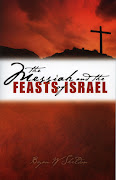
The Messiah and the Feasts of Israel


'The Messiah and the Feasts of Israel' is the latest book from the pen of Bryan Sheldon. The synopsis is as follows:

The Feasts of the Lord were placed in the calendar of the Hebrew nation as a prophetic timetable of God's redemptive plan. Israel, in celebrating the spring cycle of feasts was compelled to look back to their deliverance from Egyptian slavery and the giving of the Torah. But these feasts were not only memorials of great acts of God in the past, but also finger-posts to future events when Messiah would come. For the Messiah would:

  1. Die a substitutionary death at Passover

  2. Be buried at the Feast of Unleavened Bread

  3. Be resurrected at the Feast of Firstfruits, and

  4. Pour out the Spirit of God from His place of ascension at the Feast of Weeks

Moreover, the prophetic timetable has not yet run its course, for the fulfilment of the autumn cycle of Feasts is still to come. The Messiah will:

  1. Return at a future Feast of Trumpets

  2. Judge the Jewish nation on a coming Day of Atonement, and

  3. Initiate the millennial kingdom at a Feast of Tabernacles

Let it be known that God is still the Lord of History and He is working His purposes out as year succeeds year.