Welcome to the Mountjoy Ministries Blog

This blog was authored by Bryan W. Sheldon, author and Bible teacher. His books are listed below. The studies in the blog are offered in the desire that they may be helpful in directing readers to the truths contained in the Bible.

Wednesday, January 21, 2015

Surveying Scripture - The Book of Job (Continued)

We continue our study in the books of experience (Job to Song of Solomon). Having considered the early chapters we now look at the rest of the book.


MAIN ARGUMENT : Chapters 3 – 37

Three men have come to visit, followed by a fourth; for they have heard of Job’s trouble. They are true friends wishing to sympathise. They sit in silence for a week.  They are dumb in the face of such a calamity. Then the speeches begin. We get words, words, words, for 35 chapters.

Job
20 chapters are attributed to Job.

4   chapters are attributed to Eliphaz.

3   chapters are attributed to Bildad.

2   chapters are attributed to Zophar.

6   chapters are attributed to Elihu, the young man.

There are fourteen speakers in the book altogether – the Lord,     Satan, Job, Job’s wife, Job’s four friends, four messengers, a spirit and a horse. We must remember that the debate that takes place is among those who know nothing of what has taken place in heaven.

The arguments presented by these friends are not to be dismissed.  They are good men, with much wisdom, drawing on such resources as  they have – their own experiences, the experiences of others, what they have heard from their fathers, etc.

Eliphaz : God is perfectly pure and righteous (4.17) and man brings trouble on himself (5.7).

Bildad :   Charges Job with godlessness (8.6 ff) for God never perverts justice (8.3)

Zophar :  Charges Job with boasting (11.2-6). God knows iniquity when He sees it (11.11).

Elihu :     God is greater than man (33.12) and only repays man (Job) what he deserves (34.11).  

But they, like Job, are in the presence of something they do not     understand. In this book there are some wonderful chapters.  

Chapter 5 on chastisement;

Chapter 9 on justification;

Chapter 23 on testing;

Chapter 28 on wisdom.   

There is wisdom here, there is truth here. It may be truth generally but it does not help Job. Human wisdom is insufficient to light up the path of the godly. Oswald Chambers said, ‘You cannot think your way out of a spiritual difficulty, you need revelation’. It is God who has the necessary information and expertise: “He knows the way I take; When He has tried me, I shall come forth as gold” (Job 23:10). They all fall silent, one by one:


Then God Speaks.

THE ANSWER OF GOD—Chapters 38-42

The answer is to do with the character of God. In the first two chapters God is introduced and referred to by his name ‘YHWH’.  In the middle section (the main argument) He is referred to as God, or God Almighty, that is, ‘Elohim’. If, as many suggest, Job is a very   ancient book, it is likely Job did not know God as YHWH. See Exodus 6:3 : “I appeared to Abraham, Isaac, and Jacob, as God Almighty, but by My name, Lord (YHWH),  I did not make Myself known to them.”

 What is the difference between the two aspects of God?

God as Elohim is linked with creation and providence.

God as YHWH is linked with revelation, redemption and restoration.

Note well – Satan appears before YHWH (not Elohim); the test was initiated by YHWH;  and in the end it is YHWH that answers, for in the last chapters it is the YHWH name of God that is used.

Further note that this precious Name, is the name that often reflects the blessing of God for His ancient people.

YHWH-Jireh (YHWH who sees and provides) (Gen.22:14)

YHWH-Rophekah (YHWH Your healer) (Exod. 15:26);

YHWH-Nissi; (YHWH my banner) (Exod. 17:8-15)

YHWH-Shammah (YHWH is there) (Ezek. 48:35)

YHWH-Rohi (YHWH my shepherd) (Ps. 23:1)

YHWH_Sabaoth (YHWH of hosts) (Rom. 9:29, James 5:4)

YHWH-Shalom (YHWH is peace) (Judges 6:24)

YHWH-Tzidkenu (YHWH our righteousness) (Jer. 23:6; 33:16)

 1.    The answer is complete (and final)

God does provide an answer – there is no question that God cannot deal with.  But the answer does not come at the beginning, or in the middle, but at the end.  It is when you have run out of answers that God’s wisdom is seen. The final unveiling of all answers is yet future.  “now I know in part, but then I will know fully just as I also have been fully known” (1 Cor. 13:12).

The wisdom of God will be demonstrated in eternity. The first speaker in this book is YHWH, and the last speaker in this book is YHWH. Similarly, “In the beginning was the Word” (John 1:1), and at the end will be the Word. The Word is the alpha and also the omega, the first and the last (Rev. 1:11; 22:13).  When God has spoken Job has to say, “I lay my hand on my mouth.” (40:4). He is silenced. And when God has finally spoken none will speak except perhaps to say ‘Amen’.

2.     The answer is convincing

God’s argument is to take them into the mysteries of creation. If it is Elohim, the God of creation that they know, then God will answer them in terms that they understand:

“Have you entered into the springs of the sea Or walked in the recesses of the deep? … “Have you understood the expanse of the earth? Tell Me, if you know all this.” (Job 38:16–18, )
“Do you know how the clouds are  balanced, Those wondrous works of Him who is perfect in knowledge?” (37:16,)

“Hast thou entered into the treasures of the snow? Or hast thou seen the treasures of the hail?” (38:22)

“Can you draw out Leviathan with a fishhook? Or press down his tongue with a cord?” (Job 41:1)

"Did you give the horse its might" (39:19
God exults in His creation.

Learn wisdom. If God bestowed such infinite skill and wisdom on a single snowflake, will He deal casually with the crown of His  creation?  If the minutest detail of any animal declares divine wisdom, will He act carelessly with man?   

God is saying,

Trust Me!


3.     The answer is compensating

 Job began with 7000 sheep – he ends with 14000.

 He began with 3000 camels – he ends with 6000.

 He began with 500 yoke of oxen – he ends with 1000.

 He began with 500 donkeys – he ends with 1000

He began with 7 sons and 3 daughters – he has another 7 sons and 3 daughters.   

Note: persons are not ‘lost’ like animals.   

Also from one who had so recently been full of boils comes daughters described with the words, ‘In all the land were no women found so fair as the daughters of Job’.

LESSON

The book of Job teaches us that God can use suffering to accomplish His will and demonstrate His infinite wisdom?  By it Satan was defeated and God glorified.

A Closing Thought

Satan is absent at the end of the book!

Monday, November 3, 2014

Surveying Scripture - the Books of Experience


Introduction:

The Bibles that we are familiar with (whatever translation they are) are divided into two, the Old Testament and the New. There are five groupings in the Old Testament and, I would suggest, five in the New. The five in the Old are:

The five books of Moses (the Law);

The twelve books of History (from Joshua to Esther);

The five books of Experience (Job to the Song of Solomon);

The five Major Prophets (Isaiah to Daniel) and lastly

The twelve Minor Prophets (Hosea to Malachi).

In this fashion we have the 39 books divided into three groups of five and two groups of twelve.

The five groups in the New Testament are as follows:

The four Gospels

The Book of Acts

The fourteen Pauline Epistles (Hebrews is included!)

The seven General Epistles

The Book of Revelation


For the next few posts we shall (D.V.) seek to find some lessons in the books of Job, Psalms, and Proverbs.

These books are at the heart of the Old Testament and often known as the Psalms or Writings. They are also known as the books of wisdom (containing as they do the writings of Solomon who had been endowed with an exceptional wisdom) or the books of experience (because of the several important testimonies recorded there). Not only so, but the life experiences of David, Solomon, Job, Moses and others that are included, are offered in Scripture as being true to life, and therefore, able also to illuminate the experience of those who read them.

Prelude:  Some say that the centre verses of the Bible are in Psalm 118: “It is better to trust in the Lord than to put confidence in man. It is better to trust in the Lord than to put confidence in princes.” (Psalm 118:8–9). If so, these books which are at the heart of the T’nach emphasise the importance of faith. Faith is God’s minimum. He has everything for faith, He has nothing for unbelief. This would suggest that all spiritual experiences are understood in terms of faith. This mysterious book, setting out the experience of Job, really has a very simple message. God is saying to Job,

Trust Me!


THE BOOK OF JOB – THE CONFLICT OF FAITH or
LIVING FOR GOD WHEN LIFE IS AN ENIGMA
---------------------------------------------------
The book of Job is 42 chapters long and can be divided into three unequal parts.
Chapters 1 and 2 serve as the introduction. Chapters 3 to 37 contain the main arguments. Chapters 38 to 42 carry the conclusion.
INTRODUCTION : Chapters 1 – 2
1.     The main characters of the narrative
(a) The Lord God, revealed here by His personal name, YHWH.  He is sovereign and in total control.
(b)   Satan. Introduced among the sons of God. He had been created perfect and previously known as Lucifer, son of the morning (Isaiah 14.12). He was the guardian cherub on the holy mountain amongst the fiery stones. What mystery is here! Even after his fall he still has access to the throne of God. It seems he is fulfilling a service—that of prosecuting council—the accuser of the brethren (Rev. 12:10).
(c)   Job. A man blameless and upright, who feared God.  He had 7 sons and 3 daughters, 7000 sheep, 3000 camels, 500 yoke of oxen, 500 donkeys and many servants. He was the greatest man among all the people of the East.
2.     The first movement.   Satan stands – Satan slanders.
 
Often referred to as the Slanderer, Satan is well named. Three times in Scripture Satan speaks.
In Genesis :         Satan slanders God to man    (Testing of Eve)
In Job :                Satan slanders man to God    (Testing of Job)
In Gospels :          Satan slanders the God/man  (Testing of Jesus)

Satan, is seeking to produce misunderstanding and separate God and man: “a slanderer separates intimate friends” (Prov. 16:28). He succeeds in Genesis; he fails in Job. Satan says, ‘“But put forth Your hand now and touch all that he has; he will surely curse You to Your face” (1:11).
(c)    God permits. “Then the Lord said to Satan, “Behold, all that he has is in your power, only do not put forth your hand on him.” (1:12) Why does God allow it?  This is debated for the rest of the book.
(d)   Satan delights. See the speed by which he completes the first stage – removing the possessions of Job and killing his sons and daughters.
(e) Job worships.  He doesn't know about the scene in heaven but he worships. "Naked I came from my mother's womb, and naked I shall return there. The Lord gave and the Lord has taken away. Blessed be the Name of the Lord." Through all this Job did not sin or blame God" (1:21,22)
3. The second movement.  Satan stands – Satan slanders
 
(a)   God initiates.  Chapter 2 begins with almost a mirror image of the encounter given in chapter 1. “The Lord said to Satan, “Have you considered My servant Job? For there is no one like him on the earth, a blameless and upright man fearing God and turning away from evil. And he still holds fast his integrity, although you incited Me against him to ruin him without cause.”” (2:3)
(b)  Satan responds.  “Skin for skin! Yes, all that a man has he will give for his life.” (2:4)

(c) God permits: "Behold he is in your power, only spare his life" (2:6)
(d)  Satan delights. So went Satan forth from the  presence of the LORD, and smote Job with sore boils from the sole of his foot unto his crown’.
(e) Job sins not: "Shall we indeed accept good from God and not adversity? In all this Job did not sin with his lips."(2:10)
 
4      The Wisdom of God

These books are called the books of wisdom. Here is the wisdom of God. Can we understand it? The first lesson here is – to find the cause of things seen, we must look to the unseen. The solution to the riddle of life is spiritual not physical. Job and Daniel would teach us that if we wish to affect things here we must address ourselves there. If we would touch things on earth we must address ourselves to heaven. Events happen here because they are allowed there.

 Job was under the protection of God.

(a)   First, everything was protected. God had placed a fence around everything.

(b)   Then the fence was contracted and only Job was protected.

(c)    Finally, only Job’s life was within the fence.

The permissive will of God in the book of Job may be too high for us. How can we understand it? There is a further example of it in Scripture, when the fence was taken completely away; “He who did not spare His own Son, but delivered Him up for us all” (Rom. 8:32). And remember, the sacrifice of the Saviour not only dealt with sin but also dealt with Satan: “..having spoiled principalities and powers, he made a shew of them openly, triumphing over them in it” (Col.2.15).
More next time.


Friday, August 22, 2014

New Titles for eReaders

Three interesting titles from Bryan Sheldon, now on Kindle and available from Amazon for eReaders (Kindle, iPad, etc)

12 Reasons why I believe Jesus was crucified on the Mount of Olives.

The site of the crucifixion of the Saviour of the World has been considered and debated for centuries. There have been those who have taken clues from the Gospel writers, added such information that has been provided by archaeology, and pointed to some spot either in or near the city of Jerusalem. But for those who are Bible students the results do not seem to echo that which they feel the Scriptures depict.

There are two sites that have obtained favour, one is now the site of the Church of the Holy Sepulchre, and the other is known as Gordon’s Calvary. Most visitors to Jerusalem are taken to these locations where they may contemplate the mighty act of redemption that is said to have taken place there. But the Bible tells us that the death of Jesus of Nazareth, Messiah of Israel and Son of God, was as a sacrifice for sin, and if so, had to meet the very particular and detailed requirements laid down in the T’nach for an acceptable sacrifice. If His crucifixion took place at either of the traditional locations it would not have been admissible and we would still be without hope. Moreover, the whole purpose of the incarnation would have been overthrown and Satan would have accomplished His purpose of ensuring that the death of the Messiah was invalidated because it did not meet the strict demands laid down in the Torah.

However, this writer suggests that the death Jesus accomplished met all constraints. It was in the right way, at the right time and also in the right place. I believe that the Bible gives us enough detail to be confident that all the types and prophecies were fulfilled and every constraint satisfied. Accordingly we can be confident that future events will also be fulfilled exactly as prophesied in the Scriptures.

So this booklet is offered to provide some Scriptural pointers to the place where the greatest single act for the salvation of humankind was accomplished. I believe that the death of Jesus was prophesied in the T’nach (Old Testament) and accomplished in accordance with prophecy and type. Therefore it had to be on the day specified, at the time designated, fulfilling prophecy and specifically in the place chosen by God.

Why I Believe Jesus was in the tomb for a full three nights and three days or 'The Sign of the Prophet Jonah'

 
        One of the most frequently raised questions at our Bible Schools is ‘how do we square the sign of the prophet Jonah (that Jesus was to be in ‘the heart of the earth’ for three days and three nights), with the traditional view that Jesus died on a Friday and rose on the following Sunday, a period of less than two days?’

While the question does not impact on our salvation (that is secure if we believe that Jesus died for our sins and rose again), nevertheless a lack of clarity on the subject is enough to be an irritation and possibly, for those of a certain temperament, a pinprick in their confidence in the total reliability of the Bible.

The usual method of squaring the circle is stated thus: “‘Three days and three nights’ represents a Semitic idiom for any portion of three calendar days. So there is no need to see a contradiction with the usual Holy Week chronology, including a Friday crucifixion and a Sunday resurrection, or to propose an alternative chronology” (Craig L. Blomberg). This does not sit well with some of those that study the Scriptures.

In our teaching sessions I have offered an alternative which appears to have been well received, as a result of which I have been asked to publish.

I recognise that what I offer will not satisfy all—it does not dot all the i‘s and cross all the t‘s, but it is submitted with a humble desire to contribute to the discussion.

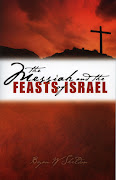
The Messiah and the Priesthood of Israel


The education of the nation of Israel was extensive, detailed and
comprehensive. It was founded by covenant which established a priestly system that was meticulously organized and designed to function continuously. At its heart was a purpose-built Sanctuary where the priesthood could operate as mediators between the nation and the Lord. In addition to daily offerings, the divinely inspired Law provided for a calendar of pre-ordained festivals where Israel could articulate their appreciation for the bounty and mercy of their God.

All of these, the Priesthood, the Sanctuary, the Sacrifices and the Festivals, were needed to prepare Israel for the coming of their Messiah, the One whose multi-faceted ministry would require Him:

to be a High Priest of the order of Melchizedek,

operate in the heavenly Sanctuary

where He would offer a superior sacrifice

in accordance with the pre-ordained timetable

to inaugurate a superior covenant.

This book seeks to acknowledge the greatness and glory of the Lord Jesus as He fulfilled in every detail that which was prefigured by the priestly culture of Israel.

His was no ordinary death: the biographical part of the New Testament speaks of His dying as being different to the death of any other individual, even different to those who were executed at the same time and in the same location as Him. What was the difference? His decease is put forward as a death that He accomplished. Not in the terms of a suicide but rather the ordering of events to fulfill those necessary pre-conditions published by the Creator God for a substitutionary sacrifice that would provide the grounds for the reconciliation of sinful humanity. Others might suffer death but He accomplished His (Luke 9:31). His decease had to be at a very specific time, on a very specific date, in a very specific place, in a very specific way. Although it seemed He was always in imminent danger of losing His life, He declared that none of the attempts on His life would succeed until He presented Himself to die in Jerusalem, on a day that He chose, at a time that He selected, in a pre-ordained location as a ransom for humanity. In other words His death was the sacrificial offering that in itself satisfied every demand of a holy God and needed nothing further to perfect it, while at the same time it ministered meaning to all of Israel’s previous sacrifices.

Moreover, a sacrifice needs a priest to offer it. Instructions contained in the Bible declare that a qualified, gifted and called intermediary was necessary for the offering to be acceptable to God. The wonder of the cross is, that in the purposes of God, the office of priest is occupied by the same One who was the sacrifice. If we may give a particular emphasis to the words of Abraham when he was on a similar quest; he said, “My son, God will provide himself a lamb for a burnt offering” (Gen. 22:8, KJV) (all references will be from the NKJV unless otherwise stated). Jesus, Israel’s Messiah, as High Priest brought the perfect sacrifice (Himself) and lay down His life for the sins of the world; then continuing in His office as High Priest entered the presence of God with the blood of the sacrifice, that is, His own precious blood. The objection that He was not of the tribe of Levi and the family of Aaron, as required by the Law of Moses, is overcome by the knowledge that there was another order of High Priest in the Bible; an order that is identified as being superior to the Aaronic order; an order that allows for a King/Priest. It is the order of Melchizedek (Ps. 110:4 based on Gen: 14:18-20 (see chapter 14)). The Scriptures put forward the case that Jesus of Nazareth was called to be High Priest of that order.

This book is therefore a study based on the premise that the Priesthood and Monarchy of Israel were offices authorized by God to prepare Israel for the coming of their Messiah, although for our current enquiry it will be the Priesthood that will receive our attention. To be able to extract spiritual benefit from this subject we will need to examine the history and training of Israel. There we will find finger-posts and pointers to the coming of the One who would be Sovereign and Saviour, Priest and Offering.

Monday, May 19, 2014

The Book of Job

Living for God when Life is an enigma


The Answer of God

God provides an answer. Not the answer Job wanted but nevertheless an answer. The answer is linked with the character of God.

In chapters 1 and 2 God is identified by His personal name YHWH. This is His Name when He is linked with revelation, redemption and restoration, as evidence by the compound names YHWH-Tzidkenu (The Lord our righteousness); YHWH-Jireh (The Lord who provides), etc.

In chapters 3 through 37 He is identified by the Name Elohim, which is the Name used when He is linked with creation and providence.

The in chapters 38 through 42 He reappears in the narrative under His Name of YHWH to provide an answer for Job.

What we are indicating here is – the test was initiated by YHWH and in the end is answered by YHWH. This strongly suggests that to be able to rightly respond to difficult issues such as bereavement and loss, and be able to rightly react to questions such as ‘why do the innocent suffer?’ you have to understand the character of God.

Jesus (Salvation of YHWH)

The character of God in revelation, redemption and restoration is best seen in the person of Jesus. And the cross (the emblem of the unjust, inhuman abuse of the only innocent man that ever lived) is the highest expression of the wisdom of God. It does not commend itself to human reason, INDEED IT IS FOOLISHNESS TO MOST. “We preach Christ crucified, to the Jews a stumbling block and to the Greeks foolishness” (1 Cor. 1:23). This confirms what God revealed through Isaiah: “For My thoughts are not your thoughts, Nor are your ways My ways,” says the Lord. “For as the heavens are higher than the earth, So are My ways higher than your ways, And My thoughts than your thoughts” (Isaiah 55:8–9).

THE ANSWER OF YHWH

The answer is complete and final

There is no question that God cannot deal with - but the answer invariably comes at the end (not in the middle or at the beginning). “For now we see in a mirror dimly, but then face to face; now I know in part, but then I will know fully just as I also have been fully known” (1 Cor. 13:12) .

The first speaker was God, ‘In the beginning was the Word’ (John 1:1) and the last speaker will be God! When God has spoken – all will be silenced, except to say ‘Amen’. In the book under consideration, after all others have fallen silent,  God speaks and Job is compelled to say, "Behold, I am insignificant; what can I reply to You? I lay my hand on my mouth.” (Job 40:4)   He is silenced!!

The answer is convincing

YHWH answers with a stream of rhetorical questions regarding the mysteries of creation.

“Do you know about the layers of the thick clouds?” (Job 37:16)

“Have you entered the storehouses of the snow, Or have you seen the storehouses of the hail?” (Job 38:22)

“Can you hunt the prey for the lion, Or satisfy the appetite of the young lions?” (Job 38:39)

“Do you give the horse his might? Do you clothe his neck with a mane?” (Job 39:19)

He is calling on Job to ‘learn wisdom’.  If YHWH has bestowed skill and wisdom on the smallest snowflake will He act carelessly with the crown of His creation? If the minutest detail of any animal declares divine wisdom, will He act carelessly with man? Even if Job only knows God in terms of Elohim, i.e. in terms of creation, God says, that is still enough information to come to a right understanding of the character of the Lord of heaven and earth.

God was saying  to Job TRUST ME! And He has the same message for us, i.e.

Trust Me!

The answer is compensating

7000 sheep at the beginning: 14000 at the end.

3000 camels at the beginning - 6000 at the end.

500 yoke of oxen at the beginning  - 1000 at the end.

500 donkeys at the beginning  - 1000 at the end.

7 sons and 3 daughters at the beginning - now another 7 sons and 3 daughters. (N.B. People are not the same as animals!)

And this man, who had been covered with sores from head to toe, was the father of daughters of whom it was said:  

“In all the land no women were found so fair as Job’s daughters; and their father gave them inheritance among their brothers.” (Job 42:15)

Conclusion to Job

By the end of the book Satan is defeated and God glorified.  Note - Satan is absent at the end of the book.

Reading the book of Job perhaps could teach us how to live for God when life is an enigma.

At least we should learn the one main lesson – God said, and continues to say:

TRUST ME!

Saturday, April 26, 2014

Living for God when life is an enigma

The Message of Job


JOB - the first book of Wisdom

These books are called the books of wisdom. Herein is the wisdom of God. To find the cause of the seen we must look to the unseen. The solution to the riddle of life is spiritual not physical. You cannot think your way out of a spiritual difficulty. Job and Daniel would teach us that if we wish to affect things here we must address ourselves there. Events happen here because they are allowed there. But remember, Job was under the protection of God

First everything was protected

Then only Job was protected

Then only his life was protected

The permissive will of God in Job may be too high for us – How can we understand it? For all that has happened to Job he is still under the protection of God - But what about Jesus? There the fence was completely taken away: ‘He that spared not His own son, but freely gave Him up’.

Main Arguments

3 men have come to visit – they are joined by a fourth. Initially they are dumb in the face of such a calamity. Then words,  words, words (for 35 chapters). 20 chapters for Job, 4 for Eliphaz, 3 for Bildad, 2 for Zophar and 6 for Elihu. There are fourteen  speakers, The Lord, Satan, Job, Job’s wife, Job’s friends, four messengers, a spirit and a horse. Remember, the debate takes place among those who know nothing of what has happened in heaven.

The arguments presented by these men are drawn on such resources as they have – their own experience, the experience of others, what they have heard from their fathers.

BUT THEY - LIKE JOB - ARE IN THE PRESENCE OF SOMETHING THEY DO NOT UNDERSTAND

There is wisdom here – there is truth here. It may be truth generally but it does not help Job.  Human wisdom is insufficient to light up the path of the godly. “He knoweth the way that I take”.

As for God, His way is perfect

He maketh my way perfect.

Is this what you want? For God to make your way perfect  – even if it means living for God when life is an enigma?

They all fall silent one by one.

THEN GOD SPEAKS
 
Next Time - The Answer of God