Welcome to the Mountjoy Ministries Blog

This blog was authored by Bryan W. Sheldon, author and Bible teacher. His books are listed below. The studies in the blog are offered in the desire that they may be helpful in directing readers to the truths contained in the Bible.

Friday, September 25, 2009

Christianity Considered 6

The Mercy of God


Returning to our series 'Christianity Considered' we should examine the subject, 'the mercy of God'. That God is merciful is a fundamental truth of Christianity. It is a major subject of the Bible. The lid of the ark of the covenant that was housed in the Jewish Temple was called 'the mercy seat', because it represented the throne of God which is also called a mercy-seat. There are many references to the golden lid of the ark (the mercy seat) in the Old Testament, 26 in all, mostly in Exodus (from 25.17 ff). It is the background to the text that refers to the throne of God in the book of Hebrews: “Let us therefore come boldly to the throne of grace, that we may obtain mercy and find grace to help in time of need”. (Heb 4:16)


Why should we examine the subject, 'the mercy of God'. Because it will only be by the mercy of God that we will enter heaven. So we rejoice in the mercy of God, but we must make sure that we have a right understanding of it. Let’s ask some questions.

If everyone who gets into heaven, gets into heaven through the mercy of God, will everyone get into heaven?

Well, the answer to that is No! Not everyone will go to heaven. The Bible says: “And these will go away into everlasting punishment” (Mt 25:46), and again, “He who believes in Him is not condemned; but he who does not believe is condemned already, because he has not believed in the name of the only begotten Son of God”. (Jn 3:18) So some will not be recipients of the mercy of God. This must mean that there are some conditions fixed to the mercy of God.

What are the conditions fixed to the mercy of God?

Well, Isaiah wrote: Seek the Lord while He may be found, Call upon Him while He is near. Let the wicked forsake his way, And the unrighteous man his thoughts; Let him return to the Lord, And He will have mercy on him; And to our God, For He will abundantly pardon”. (55:6,7) Here then is the first condition – mercy has to be sought. This will mean turning around, turning toward God. And the way to seek it, is to seek God. And Isaiah says, do it now!!!

Then added to that, is the fact that you have to mean business with God. Joel wrote: “Now, therefore,” says the Lord, “Turn to Me with all your heart, With fasting, with weeping, and with mourning.” So rend your heart, and not your garments; Return to the Lord your God, For He is gracious and merciful, Slow to anger, and of great kindness." (Joel 2:13,14) This text again emphasises that the mercy of God is freely available, but only when you seek it wholeheartedly. God’s mercy is a city of refuge for the penitent, but by no means a sanctuary for the presumptuous. You cannot enjoy the mercy of God without asking, and asking wholeheartedly. You will not receive mercy automatically.

Why is God so serious about being merciful?
Because of the cost. The basis of mercy is justice. It is not issuing a pardon on no grounds, that is, just because God is kind. Rather, it is because He has satisfied His own righteousness by providing a worthy substitute. “But God, who is rich in mercy, because of His great love with which He loved us", (Eph 2:4) "… demonstrates His own love toward us, in that while we were still sinners, Christ died for us." (Rom. 5:8) That’s why God can show mercy.


The mercy of God cannot be enjoyed without satisfying the justice of God.
The justice of God could not be satisfied without the death of Christ as our substitute.


So for an individual to enjoy the mercy of God, they have to acknowledge that Christ died for them. Paul wrote: “… the Son of God … loved me and gave Himself for me”, (Gal. 2:20) because –“God did set forth (Christ) a mercy seat” (Rom. 3:25) (Young’s literal & Darby)
More next time! Good wishes to you all!

Friday, September 11, 2009

Books by Bryan

New Book


Discipleship Considered (or Christians who make a difference)


It has been suggested that I let all you fellow bloggers know that as part of my ministry I am a published author. My latest book is on the subject of Christian discipleship. Here is a short description from the rear cover.
"The call to discipleship which was familiar to evangelicals of a past age is seldom heard today. This book places before all those who have been blessed with the salvation provided by the Son of God, the challenge of Christian living and the need to follow in the footsteps of the Master. The book asks and answers the question, ‘Why should we become disciples of Christ?’ It then examines what is entailed in discipleship. It suggests that it will require the full use of one’s abilities, energy and resources. Thus the cost may appear to be heavy, but the quality of life will be special and the rewards immense. The Lord still speaks today to those who will listen: 'If anyone desires to come after Me, let him … follow me.'"
It is available from me for £6 (six UK pounds) (post and packing included).


There is companion volume with an evangelical emphasis. It is called:
Christianity Considered

‘Christianity Considered’ is a book suitable for those enquiring about the Christian faith. It has chapters on the following subjects.

1. Is the Bible trustworthy?
2. Who was Jesus?
3. Why did He die?
4. Did He really rise from the dead?
5. How did they become Christians in Bible times?
6. How can I become a Christian?


This one is available from me at a cost of £5 (five UK pounds) (post and packing included).

Other titles available.

‘The Miracles of the Messiah’

Almost two millennia ago, a group of Jewish leaders obtained the execution of a young man, Jesus of Nazareth. The death of this young Jew has had implications for the whole of humankind ever since. This book seeks to re-examine the events of those days and place them in the culture of the period. It will seek to answer the following questions:


Did Jesus of Nazareth provide evidence that He was the true Messiah of Israel? If He did, why then did they reject and execute Him?


A right understanding of this subject is necessary to be able to appreciate how one decision, taken by a relatively small number of men in a small, middle-eastern country, could have affected countless generations of people ever since.


'Miracles of the Messiah' is available from me at a cost of £8 (eight UK pounds)(post and packing included).


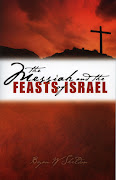
‘The Messiah and the Feasts of Israel’


The Feasts of the Lord were placed in the calendar of the Hebrew nation as a prophetic timetable of God’s redemptive plan. Israel, in celebrating the spring cycle of feasts was compelled to look back to their deliverance from Egyptian slavery and the giving of the Torah.


But these feasts were not only memorials of great acts of God in the past, but also finger-posts to future events when Messiah would come. For the Messiah would die a substitutionary death at Passover, be buried at the Feast of Unleavened Bread, be resurrected at the Feast of Firstfruits, and pour out the Spirit of God from His place of ascension at the Feast of Weeks.


Moreover, the prophetic timetable has not yet run its course, for the fulfilment of the autumn cycle of Feasts is still to come. The Messiah will return at a future Feast of Trumpets, judge the Jewish nation on a coming Day of Atonement, and initiate the Millennial kingdom at a Feast of Tabernacles. Let it be known that God is still the Lord of History and He is working His purpose out as year succeeds to year.

‘Surveying Scripture’


Both Testaments of the Bible fall comfortably into five blocks. ‘Surveying Scripture’ examines each block and lays out the main theme of each group. There is a section on each of the following :


The Law (Genesis to Deuteronomy) (5 books);
History (Joshua to Esther) (12 Books)
Experience (Job to Song of Songs) (5 Books);
Major Prophets (Isaiah to Daniel) (5 Books);
Minor Prophets (Hosea to Malachi) (12 books);
The Gospels (Matthew to John) (4 Books);
The Book of Acts (1 Book);
The Pauline Epistles (Romans to Hebrews) (14 Books);
The General Epistles (James to Jude) (7 Books);
The Book of Revelation (1 Book)
This one is available from Bryan at a cost of £6 (six UK pounds) (including post and packing)
Orders can be sent by email to 'bryan@bryansbiblestudy.co.uk'


Tuesday, September 1, 2009

Christianity Considered 5 (Cont)

Some Notable Conversions


In our last blog we looked at the life changing experiences of an Ethiopian Statesman, a Jewish Rabbi and a Roman Centurian. This time we will look at a couple of Bible conversions of those with more humble employment. First a Non-Jewish business woman, called Lydia.


Lydia
In Acts 16, there is the narrative of Lydia, a business woman who sold cloth for the making of garments. The record carries a telling remark—that the Lord opened her heart. (Acts 16.14) This allows us to remark on something that might have been overlooked. That the heart needs to be affected by the gospel, as well as the intellect. Paul said, “if you confess with your mouth the Lord Jesus and believe in your heart that God has raised Him from the dead, you will be saved”. (Rom. 10:9) For it is “with the heart one believes unto righteousness, and with the mouth confession is made unto salvation.” (Rom. 10:10)

What does it mean ‘believe in your heart’?

What gets affected when you believe in your heart, as compared to just believing with your mind? We will return to the example of Saul.

His conscience was affected. He was under conviction. The Bible says it was as if he was kicking against the goads [sticks used for prodding working animals].


His understanding was affected. He realised that the Jesus he was persecuting was the risen Messiah and Son of God.


His will was affected. He yielded to Jesus and began to follow Him.
It changed his whole life - his ambitions, his character, his relationships, his whole perspective on life.


Note the connection between heart and tongue.

If we truly believe in the heart we will confess with the tongue. These last verses demonstrate the connection between heart and tongue. As the heart believes, so the tongue speaks. Those that believe in Jesus as their Saviour will confess Him before others. Look how Paul gave his testimony, even when faced with hostile crowds. (See Acts 22.3ff; 26.6ff)


The Philippian Jailer and his family.

Returning to the Acts of the Apostles, there is yet another conversion that would interest us. That of the Philippian jailer. (Acts 16) Paul and Silas, witnessing in Europe for the first time, were the victims of anti-Semitism. They were beaten and imprisoned unlawfully, yet they remained in good spirits and sang hymns while held in an inner cell. Then there occurred a small earthquake, which released their manacles and opened the prison doors. The jailer, thinking his prisoners had escaped, was prepared to commit suicide, rather than face execution for dereliction of duty, when out of the darkness the voice of Paul assured him that all the prisoners were still there. The jailer, realising the earth tremor was a divine intervention, fell down before Paul and asked, “What must I do to be saved?” Paul responded with the kernel of the Christian message, “believe on the Lord Jesus Christ, and you will be saved”. The gospel message, then, is simply the requirement for individuals to believe in the person and work of the Jewish Messiah, Jesus.

While Paul’s answer was simple and to the point, we can from our perspective and with the Scriptures available to us, suggest the following as the larger message, of which Paul’s response was the distilled essence.

Jesus is His human name, therefore we are to believe in the virgin birth and impeccable life of Jesus of Nazareth.

Christ refers to His office as Messiah, in which work He was required to die for the sins of the world. Therefore, we are to believe in His substitutionary death at Calvary.

Lord refers to His current position at the right hand of the throne of God. To be saved we need to acknowledge the Lordship of Christ.

A postscript in respect of the people of Berea.


Paul on his travels proclaimed the gospel in a place called Berea. As a result the Bereans received an honourable mention in Luke’s narrative. They are described as noble because they did not just take Paul’s word as gospel truth, but searched the Scriptures to confirm every detail. May I suggest that this be our practice, that we constantly search the Scriptures to see whether our pastors and teachers are providing us with the unadulterated Word of God. If Paul was subjected to such scrutiny and the Bible commends those that did it—how much more we. Remember, God has promised a blessing to those that read His Word.

Saturday, August 15, 2009

Christianity Considered 5


Experiencing the Gospel


So far in this series we have considered the facts of the gospel. That there was an individual named Jesus of Nazareth, that He was God walking this earth in human form—That He died on a cross at the hands of the Jews and the Romans—that He rose from the dead and returned to heaven in bodily form. Now we need to consider the experience of the gospel. We must look at those examples presented to us, of people whose lives were radically changed, when they placed their trust in what Jesus did when He lived, died and rose again.

It is Luke who provides us the most information in this respect, in the fifth book of the New Testament called, ‘The Acts of the Apostles’. The first seven chapters deal with events in Jerusalem after the ascension of Jesus. It details the birth of the Christian Church, with thousands converted and Peter at the heart of it all. It is right that the great sweeping movement of the Spirit of God should be recorded and we should be aware of the way the Church was born. But for our purpose we are more interested in how the gospel influenced individuals rather than large groups, and Luke, the consummate historian, includes in his record how the gospel changed the lives of individual men and women. For example, in chapters 8, 9 and 10 we have evidence of the effect of the gospel of Christ upon three men, an African statesman, a Jewish Rabbi and a Roman centurion.
The African Statesman.

Here is a man, evidently a person who had embraced the religion of the Jews, returning to Ethiopia where he held high office in government. He was in his chariot reading a scroll of Isaiah the prophet—that is, a portion of the sacred writings of the Jews. He had been up to Jerusalem to attend a festival, and bought the scroll while he was there. Philip, himself a new Christian, met with him and asked if he understood what he was reading. He was reading that part of the Isaiah prophecy that said, "In His humiliation He was deprived of justice. Who can speak of His descendants? For His life was taken from the earth.” (Acts 8:33,34) The Ethiopian asked Philip, "who is the writer referring to?" Philip explained, Isaiah was speaking of the Messiah who was to come and die for the sins of the Jews and the sins of the Gentiles, for “He was wounded for our transgressions, He was bruised for our iniquities; … And the Lord has laid on Him the iniquity of us all”. (Isaiah 53:5,6)

The Ethiopian, already educated regarding the Jewish Messiah—it had been the main subject of conversation and speculation while he had been in Jerusalem — was able to understand the principle of the substitutionary nature of the death of Jesus of Nazareth, the Son of God and Redeemer of Israel. He asked if he could become a Christian, and be baptized. Philip said, “If you believe with all your heart, you may.” (Acts 8.37) The African responded in the affirmative, and was baptised there and then.

Emphasised in this conversion are certain important ingredients.

1. At the heart of the encounter is the Scriptures—he was reading his Bible.

2. The message he heard from Philip was regarding the substitutionary death of the Messiah upon the cross.

He demonstrated he had grasped what was involved and embraced it by asking for baptism (a rite that demonstrates a new start).

The Jewish Rabbi.

Saul of Tarsus, Rabbi and special envoy of the Jewish leaders in Jerusalem, was given letters of authority to extradite and imprison any followers of Jesus who had fled to Damascus. He himself was to execute the extradition warrant. He was on this mission, and had almost reached Damascus when he had a traumatic experience. He was blinded by the glory of God, and heard a voice speaking to him out of heaven. It was Jesus Himself, asking “Saul, Saul, why are you persecuting me?” He fell to the ground and acknowledged that Jesus was alive and the true Messiah of Israel. He became a follower of Christ from that day on.

Emphasised in Saul’s conversion are the following.

1. The Lord Jesus Christ Himself, robed in the glory of God.

2. That He was alive and the resurrection really did take place.

3. Saul also demonstrated his commitment by being baptised.

The Roman Centurion.

The third conversion is that of Cornelius, a soldier in the employ of Rome, who was a ‘God-fearer’. He already had some knowledge of the Jewish religion, and demonstrated his generous disposition by acts of kindness and gifts of money to the local synagogue. Peter was instructed to visit him and preach the gospel. Peter, initially reluctant to visit a non-Jew, finally acceded and began to explain to Cornelius and his household something of the person and work of Jesus, the Messiah. But before Peter could come to the end of his sermon the Spirit of God had fallen on the assembled company, a clear witness that they had been accepted for salvation. This Gentile household was the first among the non-Jewish population to embrace Christianity.

The main points to identify here are as follows:

1. The Spirit of God (everyone in the household was affected by His presence.


2. The ascension of Christ because the Spirit of God was only available as Cornelius and his household experienced it, after the return of Jesus to heaven.


And again, the decision of the household members was seen in the rite of baptism. (Acts 10.47)

In summarising these three important personal conversions, there are some things to remark on.

The Bible makes them representative. The group is made up of a Jewish proselyte, a Jew and a Gentile. They also represent the three main population streams that rose from the sons of Noah, i.e. Ham, Shem and Japheth. If they are representative, I would suggest that the main ingredients needed to bring a soul from darkness to light, from death to life must be included here. So let’s pull the central features of the three experiences together.

The main features of the three experiences

(1) The Scriptures (the Bible, the Word of God), which was the both the start and the heart of the conversion of the African statesman.

(2) The Person and Work of Christ.

(i) In the first narrative, Philip preached to the Ethiopian the truths concerning ‘Jesus’, especially explaining the crucifixion since he was reading from Isaiah 53, the prophecy of the suffering servant of Jehovah.

(ii) In the second, Saul asked, ‘who are you, Lord?’ and was told, ‘I am Jesus’. This put the resurrection of Christ at the heart of the conversion. He had encountered the risen Christ, even though previously he had been convinced that stories of the resurrection were a fabrication of the imagination of the disciples.

(iii) In the third, Peter speaks of the death and resurrection of Jesus to the household of Cornelius, but it is His ascension that is the background to the gift of the Holy Spirit which was enjoyed by the Roman centurion and his family in the third of the three examples. (See Acts 2.33)

(3) The Spirit of God is active in all conversions, and is especially highlighted in the third of the above examples.

It could be that these are the essential elements in any true conversion.

In respect of the Word of God, Paul wrote, “faith comes by hearing, and hearing by the Word of God”. (Rom.10.17). It is the Bible that provides the information that enables an intelligent response to the gospel.

In respect of the person and work of the Lord. Jesus, Son of God, died, was buried, rose again and returned to heaven so that those who personally accept His substitutionary death might also have eternal life and join Him in heaven.

In respect of the work of the Spirit of God. Jesus said, “Except a man be born of … the Spirit, he cannot enter into the kingdom of God”. (John 3.5) It is the Spirit of God that enables a spiritual response to the appeal of the gospel.
In the next blog we will look at one or two more examples of people that embraced the gospel and had their lives changed for the better.

Tuesday, August 4, 2009

Christianity Considered 4 (Cont)


Jesus rose from the dead


But what kind of being was He?


Granted that Mary and the disciples met with someone, and granted that it was Jesus raised from the dead. But was He the same as before? Others had been raised from the dead, even after three days and three nights in the tomb, but it was only an extension to their earthly life. They died at a later date. What is different about this resurrection? What is different about this existence? Paul said it was the first of its kind. Jesus was the ‘firstfruits’ of this new experience. (1 Cor.15.20,23) By using the word ‘firstfruits’ he indicates that the raising of Jesus, while being the first, would be followed by others. And his examination of the whole subject illuminates the issue before us, for he asked and answered the questions that we are considering. He asked:

“How are the dead raised? With what kind of body will they come?”

Paul says, what happened to Christ will happen to those who are His disciples. Those who are ‘in Christ’ will also know, at a future date, a similar resurrection. As Jesus was raised to die no more, so also those that are Christ’s, for He “will transform our lowly bodies so that they will be like His glorious body”. (Phil. 3:21) The word is transform. We are to be transformed—but from what—to what? Paul answers by describing the differences between a terrestrial body and a spiritual body. (1 Cor. 15:42-44) Using the image of a seed being sown, he lists the contrasts between our current earthly bodies, and the body we will enjoy after the resurrection.

“The body that is sown is perishable, it is raised imperishable;
it is sown in dishonour, it is raised in glory;
it is sown in weakness, it is raised in power;
it is sown a natural body, it is raised a spiritual body.”


The new body will be immortal, glorious, powerful and spiritual, in contrast to the weak, decaying, mortal frame that we currently occupy. This is a remarkable contrast but has he got any evidence? Does he know of anyone who has gone through this transformation? Yes. Jesus! Paul says our new body will be like “His glorious body”. John, the beloved disciple, said, “we shall be like Him”, that is like the resurrected Jesus. (1 John 3.2) Well, let’s re-examine the eye-witness testimonies and ask some pertinent questions.
Where did He get His clothes?

The resurrected Jesus always appeared fully clothed, but brought through no clothes from His earthly life. He was crucified naked, (His regular clothes were taken by the Roman soldiers), and the grave clothes He was buried in were left in the tomb. This suggests that the spiritual body can either clothe itself, or give itself the appearance of being dressed. Even to the degree that to one, He was thought to be a gardener, to others He was thought to be a traveling Rabbi, and then again to others that He was a fisherman. And all these were His close companions.

Why did they not recognise Him at first?

There is something different, indeed something new, about the resurrection body. So much so, that though they saw Him, yet they did not know Him. But then, when He did or said something familiar - then they recognized Him. This applied, even to those who knew Him well.
Here are some examples.

Mary thought the stranger near the grave of Jesus was the gardener—initially not recognising Him. But when He said her name (the something familiar)—then she knew it was her Lord.


The two on the road to Emmaus spent some considerable time in His presence thinking He was a visitor to the area. Yet when He accepted their invitation to share a meal with them and said grace (the something familiar), they recognised Him.


The disciples in the boat did not recognise the stranger on the shore until they were instructed to repeat what they had done when Jesus had first called Peter (the something familiar). Then they were aware that it was Jesus.

And though He kept company with the disciples for nearly seven weeks, sometimes in public, He was never seen/recognised by any unbeliever. How remarkable!

How did He travel?

His body was a spiritual body. With the spirit as its engine, it appeared and disappeared at will. It travelled at His bidding anywhere and everywhere. He was seen in Jerusalem and Emmaus and Jerusalem again and Galilee and Jerusalem yet again, sometimes with hardly any time interval between. He entered rooms that were locked, without opening doors or windows. Even the force of gravity could not hold Him. Such are some of the abilities of the resurrection body.

A final question

Why is the resurrection so important? We will let Paul answer it. “But if there is no resurrection of the dead, then Christ is not risen. And if Christ is not risen, then our preaching is empty and your faith is also empty”. (1 Cor. 15:13,14) In other words, no resurrection—no salvation. But Christ did rise, and become the first to conquer death. Hallelujah!

Tuesday, July 28, 2009

Christianity Considered 4


Did Jesus really rise from the dead?


In our last blog we had come to the end of the initial appearances of the resurrected Christ in Jerusalem. But He had left them instructions to go to Galilee. This is where they saw Him next.

In Galilee

Seven of the disciples were fishermen. Peter led them back to their old occupation on the sea of Galilee. He was still distressed that he had denied his Lord when Jesus was in custody, so he had decided to leave the service of the Messiah and return to his business as a commercial fisherman. But although they fished all night yet they caught nothing! Did the Lord have a hand in ensuring their net was empty? Certainly in the morning a stranger on the shore asked them if they had caught anything. The answer was ‘nothing’. The stranger was, of course, Jesus, though still unrecognized. When instructed to fish again by casting the net on the other side of the boat, they immediately netted a shoal of mature fish. At this point they realised the stranger was none other than Jesus, their Lord and Master. When they finally reached shore He had a meal already prepared for them.

An appearance to a large company of His disciples.

The rendezvous in Galilee that Jesus had previously promised was not only for the eleven but for all the disciples. Although the number of His followers was no longer large, nevertheless some 500 gathered together at His invitation. Here, after assuring them that He had all authority, He gave them the famous instruction: “go and make disciples of all nations, baptising them in the name of the Father and of the Son and of the Holy Spirit, and teaching them to obey everything I have commanded you. And surely I am with you always, to the very end of the age.” (Matt. 28:19-20)
The Appearance to James

There was yet one more individual that Jesus had to meet. That was His half-brother, James. James would become an important member of the Christian community and lead the Jerusalem Church. We do not know when the resurrected Jesus met with him, or what the Lord said to him, but we do have Paul’s assurance that it happened. (1 Cor.15.7)

The Ascension

There is one more recorded resurrection appearance, that to the apostles when He ascended from the mountain overlooking Jerusalem. He gave His closest followers some last instructions and then rose from the earth, passing out of sight in the clouds. (Acts 1.9)

There was no doubt He died!

The Bible records for us the details of the death of Jesus of Nazareth. How He was first beaten to within an inch of His life, then dragged a mile up a mountain to be crucified. He was executed there, and the Roman execution party ensured that He was dead before they allowed His body to be taken from the execution stake. He was buried and remained in the tomb for 3 days. There was no doubt He was dead!

There was no doubt He rose!

Then He was seen alive again!

By one on her own, by two together, by a group of 7, a group of 10, a group of 11, a group of 500.

He was seen in the morning, in the afternoon, in the evening.


He walked with them, He talked with them, He ate with them He taught them.


He showed the marks of the crucifixion to them.


He spent a little time with some, and a long time with others.


He was seen in poor light and He was seen in good light.


The universal testimony of the followers of the Messiah—He is alive—even though some of them had initially been very reluctant to believe. The record bears all the marks of eye-witness testimony. And the Bible alludes to many more appearances, saying, “After His suffering, He showed Himself to these men and gave many convincing proofs that He was alive. He appeared to them over a period of forty days and spoke about the kingdom of God”. (Acts 1:3) There was no doubt He was alive again!

Tuesday, June 30, 2009

Did Jesus really rise from the dead?

Dear Friends,


My apologies for not posting recently but I have been away from my computer. Let me make it up to you by beginning a study on the resurrection of Christ.


Did Jesus really rise from the dead?


Most people, when asked, “Is there life after death?” reply, “I don’t know, no-one has come back to tell us”. The Bible tells us that is not true. That there is one who returned from the dead, never to die again. That one is Jesus of Nazareth, the founder of Christianity. And if He did rise from the dead, then it is a fact that demands the attention of everyone. And if He didn’t rise, then Christians have been deceived, and the foundation of the Christian faith crumbles. Paul wrote: “If only for this life we have hope in Christ, we are to be pitied more than all men”. (1 Cor.15:19) The resurrection is at the heart of the Christian message. Everything hangs on it. Jesus was just another good man, unjustly killed, if death was the end of Him. But if he rose from the dead ... ....


The Resurrection: Fact or Fiction?

It has sometimes been said that the resurrection is the best attested fact in history. Sir Edward Clarke KC, in a letter to the Rev. E.L. Macassey, offered the following perspective: “As a lawyer I have made a prolonged study of the evidences for the resurrection of Jesus Christ. To me the evidence is conclusive...I accept unreservedly as the testimony of truthful people to facts they were able to substantiate.”

B. F. Westcott, one of the ablest of New Testament textual scholars, said: “Taking all the evidence together, it is not too much to say that there is no single historical incident better or more variously supported than the resurrection”. As mentioned in an earlier study, Frank Morison, originally planned to write a monograph on the trial of Jesus. Confronted by the fact of the resurrection, he was convinced by the evidence, became a Christian and wrote instead ‘Who Moved the Stone?’

Well, what are the facts?

The Bible states that Jesus rose from the dead and showed Himself alive over a period of nearly seven weeks. (Acts 1.3) There are ten recorded resurrection appearances.

(i) To Mary of Magdala. (John 20.14 ff)
(ii) To others of the women. (Matt.28.9,10)
(iii) To Peter on his own. (Lk. 24.34; 1 Cor.15.5)
(iv) To the two on the road to Emmaus. (Lk. 24.13 ff)
(v) To a group of disciples when Thomas was absent. (Lk. 24.36 ff)
(vi) To the disciples when Thomas was present. (John 20.26 ff)
(vii) To the seven disciples by the Lake. (John 21.1 ff)
(viii) To a company of more than 500, in Galilee. (1 Cor.15.6)
(ix) To James, the half-brother of the Lord. (1 Cor.15.7)
(x) To those who witnessed the ascension. (Lk.24.50,51; Acts 1.9)

When Jesus was buried, Mary Magdalene and Mary the mother of James and Joses had noted where the grave was. It was the women that were concerned that the proper dignities had not been performed for the body of Jesus, so they returned with others on Sunday morning to anoint the body and lay it to rest honourably. But something had already happened. Angels had descended and one of them had moved aside the stone door of the tomb. A small task for an angel! The soldiers placed there to guard the body had gone, having been scared out of their wits. The women were instructed by the angelic messengers, to return to the disciples to tell them that Jesus had risen. Mary of Magdala found Peter and John and the three returned together to the tomb, and found it just as she said. Peter and John left but Mary was distraught and unwilling to leave the vicinity of the grave. Consequently, she was the first to see, and then to touch and to talk to Jesus. Initially, she did not recognise Him and so asked the stranger, who she thought was the gardener, where the body of Jesus had been taken. Jesus spoke her name, and she immediately recognised and embraced Him. Now given fresh instructions by Jesus Himself, she returned to the company of the other disciples.

While this was proceeding, Jesus was seen a second time—this time by a group of the women. He instructed them also to return to the disciples and tell them to go to Galilee.

But what about the those that ordered His execution?

Meanwhile the soldiers had returned to the Jewish leaders and told them about the earthquake and the angels. So the Sanhedrin was again convened. Talk about resurrection was particularly distressing for the Sadducees (the High Priest and Chief Priests were Sadducees) because they said that there was no life after death. They decided to start a rumour about a conspiracy—the disciples stole the body while the guard slept. Not very credible — but it gained momentum and many believed it.

The appearances of Jesus on the morning of the resurrection continued thick and fast.

At some time that morning Jesus was seen by Peter, although we have no details of the encounter. But we do have a fuller description of the experience of Cleopas and another un-named disciple. They were on the road from Jerusalem to Emmaus when they were joined by someone who looked like a travelling Rabbi. It was, of course, the resurrected Jesus. At first they did not recognise Him, but they were strangely encouraged as He gave them an explanation from the Scriptures why the Messiah had to die. It was only when they returned to the familiar surroundings of their home and Jesus broke bread that they recognised Him. But in that moment He disappeared.

The two returned from Emmaus to find the others gathered together in a locked room. With their leader executed, the followers of Jesus were worried that their lives might be in danger. At this point they still did not believe in His resurrection, even though the women had said they had seen Him. (Under Jewish law at that time, a woman was not considered a reliable witness, and her testimony was excluded from all legal trials). The two from Emmaus confirmed the testimony of the women, but they were not believed either. At that point Jesus appeared in the room, although they didn’t know quite how, since the doors and windows were locked. Consequently, the disciples thought He was a spirit. Jesus immediately scotched that idea and showed them His hands and feet that still had the nail prints. He also ate some fish to show He was real! Then He gave them a Bible study. “He told them, ‘This is what is written: The Christ will suffer and rise from the dead on the third day’”. (Lk 24:46)

However, Thomas was absent. Later they told him about the visit but he would not believe that Jesus was alive. He wanted concrete evidence. This was supplied a week later when Jesus appeared again and asked Thomas to examine His hands, feet and side—and not to doubt but believe. Thomas fell at His feet and cried, “My Lord and my God”. Thomas’ disbelief has given us a wonderful beatitude. Jesus told him, “Because you have seen me, you have believed; blessed are those who have not seen and yet have believed.” (John. 20:29)
At this stage none of the disciples have gone to Galilee as instructed. In our next blog we will see what happened when they did!


Thursday, June 4, 2009

Christianity Considered 3


Why the Cross? (Continued)


What was the significance of the death of Jesus?


The principles laid down in the Bible suggest three possible reasons.

(i) The first is that it could be a life taken unjustly, just like the murder of Abel whom Cain killed.
(ii) Then it could be payment for a capital crime.
(iii) Thirdly, it could be someone dying in the place of someone else, as a substitute.

The blood of Jesus was shed in compliance with all three principles.

(i) That it was a life taken unjustly is clear from the narrative. Jesus was the only innocent man that ever lived. Pilate, the highest Roman authority, said from the judgement seat, “I find no fault in this man”. (Luke 23.4; John 19.6) The death of Jesus was a political assassination, that is a life taken unjustly.
(ii) Secondly, it was payment for a capital crime, although not His own. This points to the third aspect.
(iii) He died as a substitute, in place of someone else.

If the Bible teaches that Jesus died as a substitute, who was He a substitute for? For sinners! Sinners who were under sentence of death by God. Paul wrote, “for all have sinned and fall short of the glory of God”. (Rom. 3:23) A condition that had a consequence. “For the wages of sin is death”. (Rom. 6:23) Who are these sinners that Jesus died as a substitute for. Well, me for one, you for another, indeed everyone, for, “There is none righteous, no, not one; There is none who understands; There is none who seeks after God. They have all turned aside; They have together become unprofitable; There is none who does good, no, not one.” (Rom. 3:10-12) At some time or another, all who are honest with themselves will admit that they have failed to keep God’s moral law and fallen short of that high standard of perfection that God expects.

But Jesus “… Himself bore our sins in His own body on the tree.” (1 Pet.2.24) “For Christ also suffered once for sins, the just for the unjust, that He might bring us to God.” (1 Pet.3.18) We need to understand, “He was wounded for our transgressions, He was bruised for our iniquities.” (Isa.53.5) for “the Lord ... laid on him the iniquity of us all”. (Isa. 53.6)

But how can the death of one man be enough for God to forgive the sins of all men? It can’t! One perfect man could only be the substitute for one other. But remember, Jesus wasn’t just a man, He was God also. Therefore the value of His substitutionary sacrifice is infinite. His death can compensate for the sins of all men.

But why crucifixion?


But that doesn’t explain why it had to be by crucifixion. Well the answer to this is a bit complicated, but here are some of the implications.

(i) First, the Romans executed those that rebelled against their rule (which was the charge that the Jewish leaders laid against Jesus) in a very painful and public manner. Their purpose was to demonstrate to everyone that Rome would not tolerate any that stood against their power and authority. Crucifixion meant pain and humiliation, as well as lasting for several hours, sometimes even days. Crucifixion also meant the victim was ‘lifted up’ in public view so that all could see their agony and pain. Jesus was executed near a very busy cross-road in Jerusalem. It overlooked the city and the Temple, and His death was witnessed by the large numbers of people who had come to Jerusalem for the Passover festival. What the Romans did not realise was that they were fulfilling God’s plan because the beginnings of Christianity had to be very public. Nothing done in secret.

(ii) Also, God needed people to see the pain and agony that sin causes. Those that die without taking Jesus Christ as their substitute will have to suffer the penalty of their own sins. They will know a similar agony as Jesus suffered when separated from God and bearing the penalty for sin. But they will suffer without reprieve. It will be continuous and eternal.

(iii) Another reason Jesus was ‘lifted up to die’ was to symbolically demonstrate that His death was a victory, not a defeat. This is the decease He said He had to accomplish. When His agony came to an end He said, “it is finished”. (John 19.30) This was a cry of triumph, shouted out at the top of His voice, not a sigh saying, ‘I am glad that is over’. He declared, in the clearest, most direct way, that He had accomplished that which He had been born to do. When He was born, Joseph and Mary were instructed to name Him ‘Jesus’, that is ‘Saviour’, “for he will save his people from their sins.” (Matt. 1:21) This He did, and now we can know eternal life, if we accept that He died for our sins. I, along with many, have sung the words to Philip Bliss’ wonderful hymn, “Hallelujah, what a Saviour”.

Bearing shame and scoffing rude,
In my place condemned He stood,
Sealed my pardon with His blood;
Hallelujah, what a Saviour!

Lifted up was He to die,
‘It is finished,’ was His cry;
Now in heaven exalted high,
Hallelujah, What a Saviour!

Tuesday, May 26, 2009

Christianity Considered 3

Christianity Considered 3


Why the Cross?


The mission of Jesus involved dying on a Roman gibbet. Jesus spoke of it on a number of occasions. We have to face the question, Why? Why did He have to die and why by crucifixion?


The cross is the most widely used symbol of Christianity. Crosses are worn on necklaces and lapel pins—they are seen on and outside churches. Yet the cross was an execution stake on which felons were put to death. Why wear such a gruesome token? It is, of course, the symbol of how the founder of Christianity, Jesus Christ, was executed. But, if Jesus was the Son of God, and had such power, why did He offer no resistance to those that arrested Him? And if He was innocent, why didn’t He put up some defence? Let us check the Biblical record to find some answers.


Did Jesus Himself say how He was to die?


Yes He did! In private conversations with His disciples, Jesus tried to prepare them for the time when He would no longer be with them. Indeed, He indicated that He would be unjustly executed. “From that time Jesus began to show to His disciples that He must go to Jerusalem, and suffer many things from the elders and chief priests and scribes, and be killed, and be raised the third day”. (Matt. 16:21) Some time later He said again, “The Son of Man is about to be betrayed into the hands of men, and they will kill Him, and the third day He will be raised up.” (Matt. 17:22,23) This second time He added the detail of how He would be taken—it would be by betrayal. And again at a later date He warned them once more. “Behold, we are going up to Jerusalem, and the Son of Man will be betrayed to the chief priests and to the scribes; and they will condemn Him to death, and deliver Him to the Gentiles to mock and to scourge and to crucify. And the third day He will rise again.” (Matt. 20:18,19) This third time He added that it would not be the Jews that would kill Him, but the Gentiles (Romans) and that His execution would be by crucifixion. These are most remarkable details of an event over which normally you would say the individual has no control. The most startling detail is His prediction that He would rise from the dead.

Did Jesus say why He was to die?


Yes He did! He said, “And as Moses lifted up the serpent in the wilderness, even so must the Son of Man be lifted up, (this is a clear reference to the manner of His death—by crucifixion) that whoever believes in Him should not perish but have eternal life.” (John 3:14,15) Here then, is the purpose of His death, that those who believe in Him, that is, in His life, death and resurrection, might themselves have eternal life. This He repeated, in different ways, on several occasions. For example, speaking of those that follow Him, “I give them eternal life, and they shall never perish.” (John 10:28) And speaking of Himself in prayer to God the Father, He said, “You have given Him authority over all flesh, that He should give eternal life to as many as You have given Him.” (John 17:2)


Does the New Testament give any account of the death of Jesus?


Yes it does! In fact the description of the death of Jesus is recorded in all four biographies. Moreover, the explanation of why He died is given in all the later books. Peter explains what happened and Paul explains why it happened. But let us look at the gospels first.

All four gospels record the events leading up to the execution. Different details are given prominence by the different authors. However, there is a harmony between them all. The events of the last twenty four hours in the earthly life of Jesus unfolded in this fashion.

The night before He died He celebrated a Jewish feast, the Passover, with His disciples. At that meal He again warned them that He would soon die, adding that it would be to obtain forgiveness of sins for many. Using a cup of red wine as a symbol for His life blood, He said, “Drink from it, all of you. For this is My blood ... which is shed for many for the remission of sins.” (Matt. 26:28) This was a confirmation of something He had said some days earlier. “The Son of Man did not come to be served, but to serve, and to give His life a ransom for many.” (Matt. 20:28) A ransom is a price paid to buy back someone from some kind of imprisonment. However, Jesus said His death would be a ransom, not just for one, but for many. Leaving the room where they had shared a last meal together, they travelled across the Kidron valley to a quiet garden, called Gethsemane, where He prayed. It was here that Judas brought a large contingent of soldiers to arrest Jesus. He offered no resistance.


From the garden at the foot of the Mount of Olives, He was taken to be questioned by two of the Jewish leaders, Annas and Caiaphas. These, His implacable enemies, were ready to recommend the death sentence. The examinations before Annas and Caiaphas took place some time after midnight. While in their custody Jesus suffered abuse and humiliation.

Early the following morning, to give the trial of Jesus some semblance of legality, the Sanhedrin (the council that ruled the Jews) was convened. Jesus was found guilty of blasphemy (a religious charge) and condemned to die. However, the Jews at that time were a conquered race, and it was the Romans that had the power of life and death over its citizens. So Jesus was taken to Pilate, the personal representative of Caesar, who was the officer who had control of Jerusalem. The Jewish leaders, to obtain confirmation of the death sentence from the Romans, had to change the accusation against Jesus, from a religious one to a political one. They accused Him of plotting against Rome. Even though Pilate was convinced that Jesus of Nazareth was innocent of all charges, he finally submitted to pressure and blackmail, and gave Him to an execution squad to crucify.

By this time Jesus was in a quite appalling condition, having been beaten, abused and flogged over a period six hours. Nevertheless, He was compelled to carry His execution stake. But because He was so weak He collapsed under its weight, and another was conscripted to carry it.

Because it was a political execution, the Romans selected a site for the crucifixion that would be very public. It was near a busy cross-roads, in fact near the road on which Jesus had ridden into Jerusalem to fulfil the prophecy, “Tell the daughter of Zion, behold your King is coming to you”. (Matt.21.5) When the execution party reached the spot, the Romans nailed Him to a cross. At this time Jesus prayed, “Father, forgive them, for they do not know what they do”. (Luke 23.34) This was at nine o’clock in the morning (the time of the morning sacrifice in the Temple). He hung on the cross for another six hours, the last three of which was under the cover of an unusual darkness. It was when the light of the sun was shut out that He cried, “My God, My God, why have You forsaken Me?” (Matt. 27:46)

At the end of the six agonising hours, during which He had suffered the wrath of man, the wrath of Satan and the wrath of God, He declared, “It is finished” (John 19.30) and gave up His life. This was at 3 o’clock in the afternoon (the time of the evening sacrifice in the Temple).

When the request came to bring His body down from the cross, one of the execution party, to make sure He was dead, thrust a spear into His side. From this open wound came blood and water to mingle with the blood already on the ground beneath the cross.

Such were the main facts of the end of Jesus’ earthly life.
He was betrayed—just as He said.
He suffered at the hands of the Jewish leaders—just as He said.
They condemned Him to death—just as He said.
They handed Him over to the Romans— just as He said.
The Romans mocked Him and flogged Him—just as He said.
He was crucified—just as He said.


To be continued

Wednesday, May 20, 2009


Christianity Considered (Part 2)


Who was Jesus (Continued)


What did others think of him?
He was scrutinised by friends and enemies. None found any error, untrue word, or unkind action. Unsolicited testimonies include the following:
From the Father. “This is My beloved Son, in whom I am well pleased.” (Matt. 3:17)
From Judas. “I have sinned by betraying innocent blood.” (Matt. 27:4)
From Pilate. “I find no fault in him at all.” (John 18:38) and “I am innocent of the blood of this just Person. You see to it.” (Matt. 27:24)
From the felon co-crucified with him. “This Man has done nothing wrong.” (Luke 23:41)
From the Roman in charge of the crucifixion party. “Certainly this was a righteous Man!” (Luke 23:47)
From an unclean spirit. “I know who You are—the Holy One of God!” (Mark 1:24; Luke 4.34)
Indirectly from Herod. Pilate said, “ … having examined him in your presence, I have found no fault in this Man concerning those things of which you accuse him; no, neither did Herod.” (Luke 23:14,15)
From Peter, the apostle to the Jews. “You were not redeemed with corruptible things, …but with the precious blood of Christ, as of a lamb without blemish and without spot.” (1 Pet. 1:18,19)
From the writer of the letter to the Hebrews speaking of Jesus, Son of God. “For we do not have a High Priest who cannot sympathize with our weaknesses, but was in all points tempted as we are, yet without sin”. (Heb 4:15)
His miracles supported His claims
The Jewish leadership, many of whom were students of the Scriptures knew what to look for in any individual making the kind of claims Jesus made. They expected attesting miracles. “For Jews request a sign”, wrote Paul. Jesus provided multiple miracles to answer this requirement. The gospel stories contain numerous examples of Jesus healing all kinds of illnesses and, in three instances, raising the dead. He also demonstrated His powers over nature. These miracles, as Archibald Alexander puts it: “...were performed, for the most part, in an open and public manner, in the presence of multitudes of witnesses, under the inspection of learned and malignant enemies, in a great variety of circumstances, and for several years in succession. His enemies never denied these signs.”
The healing of leprosy
In the culture of Jesus’ day, leprosy was considered a judgement of God upon sin. The leper was considered to be personally under the judgement of God. Therefore, the Jewish leadership expected any Messianic claimant to have an ability to heal this disease. Jesus satisfied that expectation. He helped the many lepers that were in Israel at that time, lifting the judgement of God and healing their ravaged bodies. Luke described the beginning of this ministry. “Behold, a man who was full of leprosy saw Jesus; and he fell on his face and implored him, saying, Lord, if You are willing, You can make me clean. Then he (Jesus) put out his hand and touched him, saying, I am willing; be cleansed. Immediately the leprosy left him.” (Lk.5.12,14) It is significant that this first recorded case of leprosy treated by Jesus was a person “full of leprosy”. The disease had such a hold that it had almost extinguished life. It had run its course and had the decaying man firmly in its grip. The touch of Jesus regenerated the dying body of the diseased man. On another occasion He healed ten lepers at one time. (Luke 17.12 ff.) This ability to heal lepers was also delegated to His disciples who had much success in this area. (Matt.10.7,8; 11.5) This ministry, along with other instances of healing, had added significance by its strong connection with the forgiveness of sins.
The Forgiveness of Sins
The clearest case where an authenticating miracle was used to support His claim that He could forgive sins is recorded in three places. (Matt. 9.1-8; Mark 2.1-12; and Luke 5.17-26) There a paralytic was healed only after Jesus declared his sins were forgiven. You can guess what His enemies made of that claim. They said, “Who is this who speaks blasphemies? Who can forgive sins but God alone?” (Luke 5:21) In another incident, He forgave the sins of a notorious woman. (Luke 7.48) These acts of forgiving sin are not the acts of a man, not even a good man, but the work of God.
C.S. Lewis, a University academic, said of this claim to forgive sin: “Now unless the speaker is God, this is really so preposterous as to be comic. We can all understand how a man forgives offences against himself. You tread on my toe and I forgive you, you steal my money and I forgive you. But what should we make of a man, himself unrobbed and untrodden on, who announced he forgave you for treading on other men’s toes and stealing other men’s money. This only makes sense if he is the God whose laws are broken and whose love is wounded in every sin.”
That Jesus claimed deity and was God walking the roads of Israel in human form, is further confirmed by the apostle Paul. He wrote: “Christ Jesus, who, being in the form of God, did not consider it robbery to be equal with God”, (Phil. 2:5,6), and again, “looking for the blessed hope and glorious appearing of our great God and Savior Jesus Christ”. (Titus 2:13), and again, “Christ ... who is over all, the eternally blessed God.” (Rom. 9:5)

To Summarise

If we read the gospels aright, we see that Jesus claimed to be Israel’s Messiah. But more than that He claimed a relationship with God as a co-equal. These claims were supported by actions of mercy and blessing, even to the point of forgiving the sins of individuals. There is no doubt that the writers of the gospels intended to indicate that Jesus of Nazareth was God walking the land of Israel in human form—a real man, and at the same time, really God. Consider this—God wanted to make Himself known to us, the crown of His creation. He did this by coming into the world in the person of Jesus of Nazareth.

Jesus was love personified.
Jesus was good personified
Jesus was wisdom personified
Jesus was God personified.

A last thought: CT Studd said, “If Jesus Christ be God and died for me, no sacrifice can be too great for me to make for Him”.